

Who can move an electricity meter?
Your electricity supplier is the company that bills you. In Great Britain, it normally arranges work on the meter through its appointed meter operator. Citizens Advice says to contact the current supplier first and explain where the meter is now, where you want it moved and why.
The electricity network operator, also called the distribution network operator or DNO, owns and maintains the incoming network cable and service equipment. A move to another wall, another room or an outside box may need that service cable altered. If the supplier cannot complete the whole job, it should tell you to contact the local network operator.
A registered electrician may be needed for customer-owned wiring, the consumer unit, a new meter box or preparatory work. One company should not be assumed to cover another company’s equipment. Ask for a written division of responsibility so the meter, service cable and household wiring are coordinated.
Start with these five steps
Do not book builders around an assumed meter date. First obtain a site-specific answer from the supplier and, if required, the network operator. A photograph and simple sketch can help them understand the present and proposed positions.
Tell every party about access restrictions, a prepayment meter, solar panels, a battery, Economy 7 circuits or medical equipment that relies on electricity. These details can change the equipment, sequencing and safe supply-off plan.
- Photograph the meter, serial number, reading, service head, meter board and surrounding space without opening any covers.
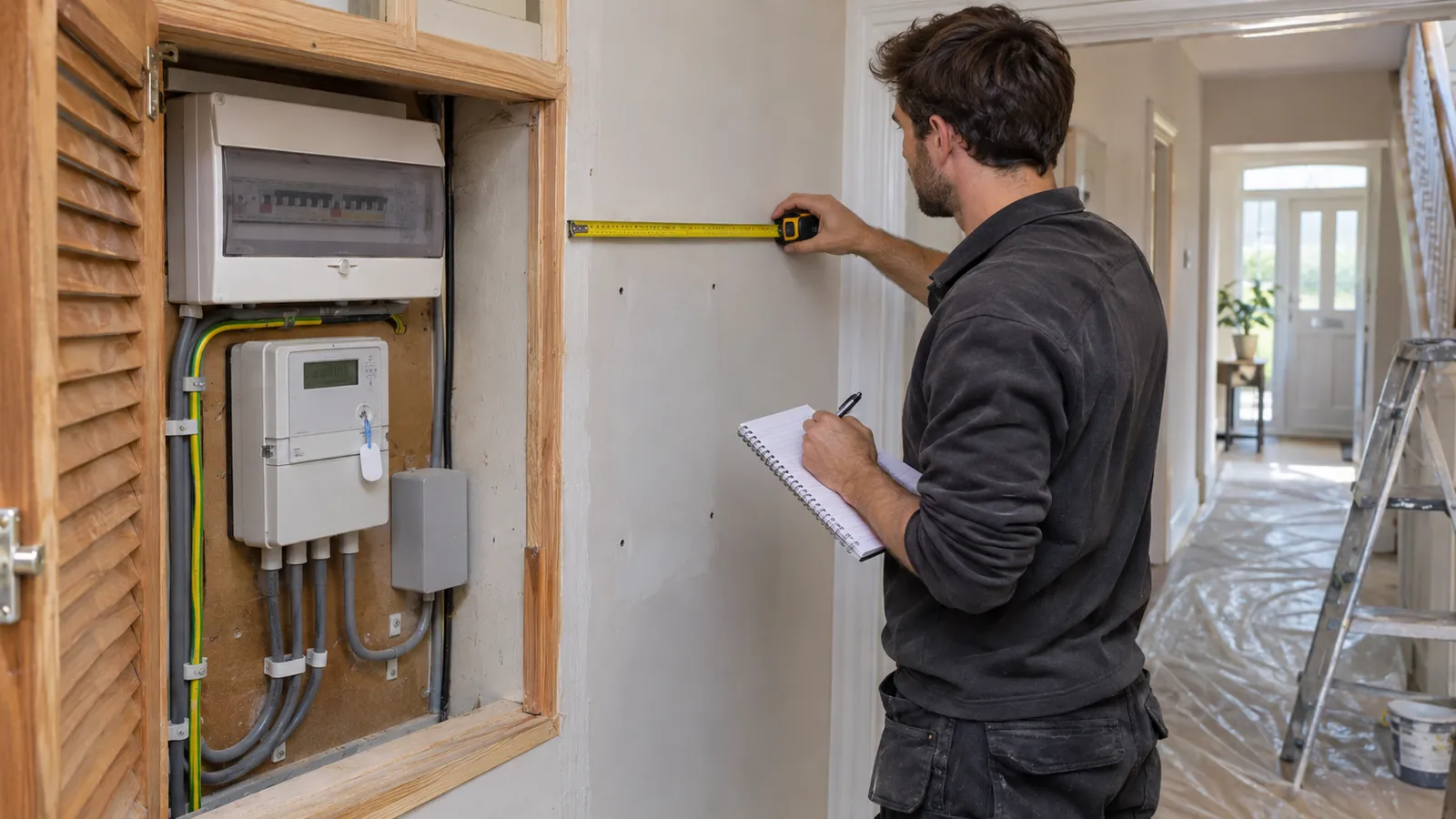
- Mark the proposed position and measure the approximate distance, including whether it crosses a wall or changes floor.
- Ask the supplier whether it can complete the move or whether the network operator must alter the service cable.
- Get itemised written quotes showing meter work, network work, electrician work, VAT and any preparatory building work.
- Agree one sequence of appointments and confirm who will leave the installation connected, sealed and ready to use.
How much does it cost to move an electricity meter?
There is no single national price. A small move that stays close to the existing service position can be very different from relocating a meter to another room or outside wall. The quote depends on distance, cable work, access, excavation, the meter box, household wiring and whether several specialists must attend.
Citizens Advice says network-operator work usually costs at least £400 and can exceed £1,000. Treat those figures as a broad warning, not a quote: prices and site conditions vary. Ask how long the quote remains valid and whether it includes reinstating walls, paths or decoration.
Only your current supplier can arrange its meter work. Citizens Advice notes that another supplier would first need to become your supplier, which also changes your tariff and contract. Do not switch solely on a cheaper relocation quote without comparing the full annual electricity cost, exit fees and timing.
Avoid paying a contractor who proposes to move sealed metering equipment without the supplier or network operator. A low price is not useful if the work is unauthorised, unsafe or leaves the account linked to the wrong meter details.
When a meter move may be free
If you cannot safely reach a prepayment meter, contact the supplier before paying for a move. Ofgem says the supplier should consider moving it, and if it cannot be moved the supplier must replace it with a different type of meter. Explain the practical problem clearly, including height, steps, a locked shared area or difficulty travelling to top up.
Citizens Advice says a supplier should move a non-smart prepayment meter free of charge when it needs moving and the customer is on the Priority Services Register. Eligibility depends on circumstances such as disability, long-term illness, age, pregnancy, young children or a temporary need for extra help.
A smart meter in prepayment mode may remove the need to reach the meter for routine top-ups, but it does not solve every accessibility or communications problem. Ask what happens if remote top-up fails, how emergency credit is accessed and whether the proposed position remains safe and readable.
Plan the appointment and power interruption
Ask how long the electricity will be off and whether the work needs one coordinated visit or separate supplier, network and electrician appointments. Do not arrange plastering, fitted furniture or a new cupboard until the authorised parties accept the proposed clearances and access.
Before isolation, safely switch off sensitive equipment and follow the installer’s instructions. If anyone depends on powered medical equipment, tell the supplier and network operator in advance and agree a safe backup plan with the equipment provider or healthcare team. Priority registration does not guarantee an uninterrupted supply.
Citizens Advice says supplier appointments are normally offered in a time slot. In Great Britain, £40 compensation can be due when a qualifying appointment is missed, changed without agreement with less than one working day’s notice, or attended without the necessary skills or tools. Keep the booking confirmation and ask which company is responsible for each appointment.
Checks before the engineer leaves
Photograph the final old-meter reading before work starts and the new opening reading after reconnection. Also record the meter serial number, every tariff register and the date and time. For a replacement meter, keep the exchange card or job sheet.
Check that lights and essential circuits work, but do not remove covers or test sealed equipment yourself. If you have Economy 7, storage heating, solar or a battery, ask the installer to confirm which registers and controlled circuits have been commissioned.
Confirm that the supplier will update the account with the new location, serial number and readings. A smart meter may need time to reconnect to communications after the move; ask how to submit manual readings meanwhile and when to report a continuing problem.
Check the first bill after relocation
The next statement should use the agreed closing and opening readings without charging the same units twice or leaving an unexplained gap. Compare the dates, serial number, registers, unit rates and standing charge with your photographs and job sheet.
If the bill is estimated or the old meter remains on the account, contact the supplier with the evidence immediately. Ask for a corrected statement rather than adjusting a Direct Debit or withholding payment without agreement. Our wrong-meter and estimated-bill guides explain the evidence to use.
Make a formal complaint if the supplier or network operator does not correct its part of the job. Keep every quote, appointment notice, photograph and case reference so the complaint shows the agreed scope and what actually happened.
Moving an electricity meter in Northern Ireland
Northern Ireland has different market arrangements. The Consumer Council says NIE Networks owns all electricity meters in Northern Ireland, including credit and keypad meters. Start with the electricity supplier for account and billing implications, and ask whether NIE Networks must survey or carry out the relocation.
Do not assume Great Britain smart-meter, compensation or Priority Services Register rules apply. Ask the supplier and NIE Networks for the applicable customer-care support, costs and appointment standards, then get the full scope in writing before building work begins.
If a billing or meter complaint remains unresolved after you have complained to the provider, the Consumer Council can give independent help in Northern Ireland.
Frequently asked questions
Can an electrician move my electricity meter?
An electrician can handle customer-owned wiring and related preparatory work, but should not move sealed supplier or network equipment without the authorised parties. Contact the electricity supplier first and ask who must do each part.
Can I move an electricity meter myself?
No. Citizens Advice says it is illegal to move a meter yourself. The work can involve live service equipment and sealed metering, so it must be arranged through the supplier and, where necessary, the network operator.
Who pays to move an electricity meter?
The person requesting a convenience or building-work move will usually need to pay the quoted costs. Accessibility support can change this, particularly for an inaccessible prepayment meter and eligible Priority Services Register customers.
How far can an electricity supplier move a meter?
There is no universal distance. The supplier will assess the existing and proposed positions. Longer moves, outdoor moves or work involving the incoming service cable commonly need the local network operator as well.
Do I need my landlord’s permission to move the meter?
If you rent, check the tenancy agreement and get written permission before altering the property or meter position. The named energy account holder should still contact the supplier, while the landlord may need to approve building work and costs.
Estimate your electricity bill
Record the closing reading on the old position and the opening reading after reconnection. Once the supplier confirms both readings, use them with the tariff rates and standing charge to check that the relocation has not created a gap, overlap or estimated charge on the next bill.
Sources
Meter-move responsibilities, access support, appointment standards, network roles and Northern Ireland ownership were checked against these sources on 14 November 2026: