

How can you tell if your bill is linked to the wrong meter?
The clearest warning is a serial number on the bill that does not match the number printed on the meter serving your home. Other clues include readings that never resemble the display, usage rising while the property is empty or a neighbour's meter reacting when you switch appliances on.
A high bill alone does not prove a crossed meter. Estimated readings, seasonal electric heating or a genuine meter fault can look similar. Check the identifiers first so the supplier receives evidence of a specific mismatch.
Check the address, MPAN and meter serial number
Start with the supply address, not only the correspondence address. It must describe the home using the electricity. This matters where flat, plot or postal numbers have changed.
Next find the Meter Point Administration Number, or MPAN, on the bill. It may be labelled supply number. The bottom row is the core 13-digit MPAN. It identifies a Great Britain electricity supply point; it is not an account number or physical meter serial number.
Use the Energy Networks Association postcode tool to identify your local network operator, then use the operator's supplier-finding service or contact it to obtain the MPAN registered to your address. Citizens Advice recommends comparing that result with the MPAN on the bill. If they differ, tell the supplier. If they match, continue by comparing the bill's meter serial number and readings with the physical meter.
- Supply address: the premises whose electricity is being charged. A billing address can be different.
- MPAN: the registered electricity supply point. Ask the network operator which MPAN belongs to the address.
- Meter serial number: the identifying number printed on the meter. It should match the meter details on the bill.
- Reading and register: the numbers used for billing. A two-rate meter may have separate day and night registers.
Identify which meter actually serves your home
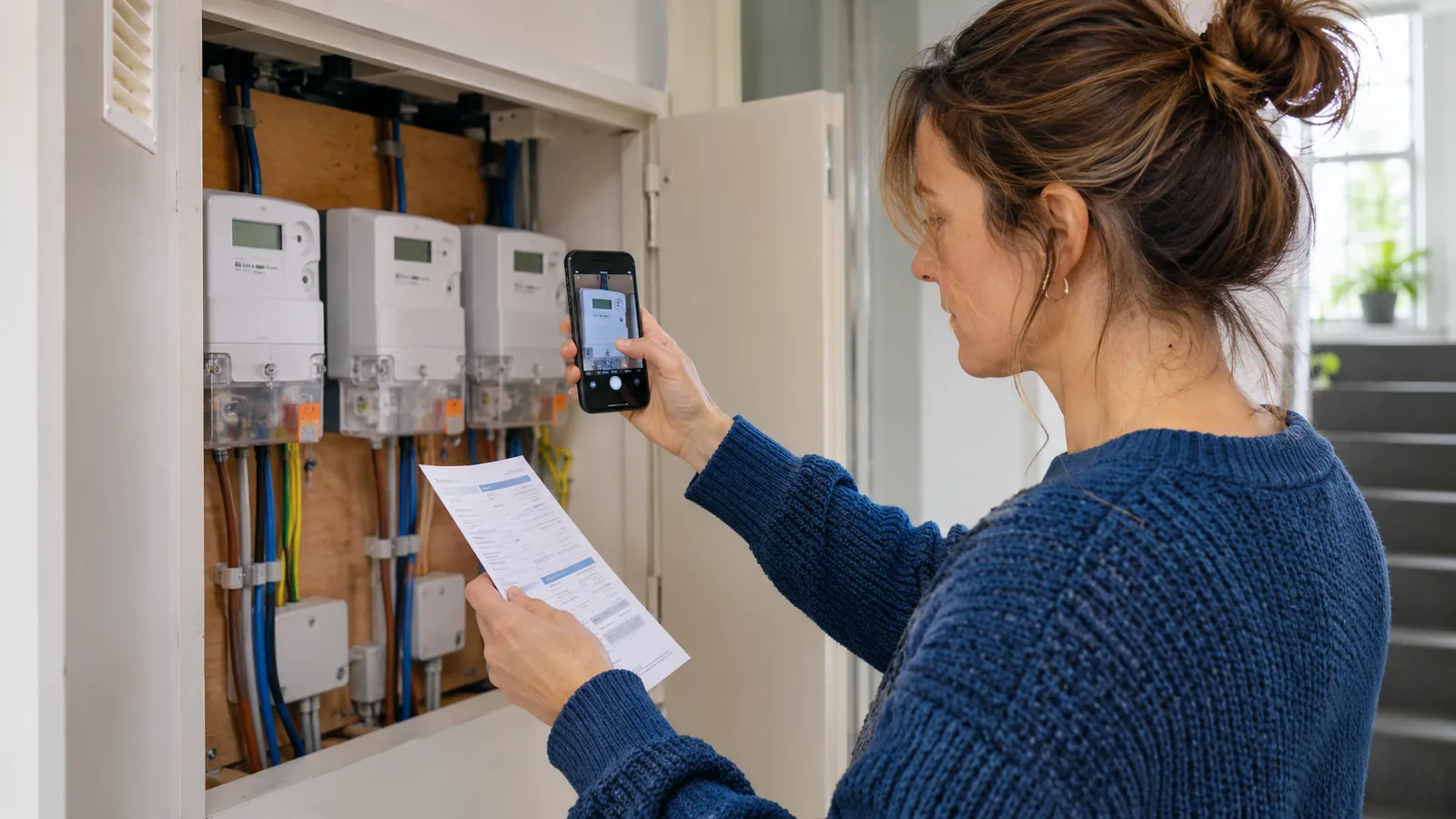
In a shared cupboard, do not rely on a handwritten flat label. Photograph the full meter, serial number and every register without moving cables or covers. Take a reading, use one ordinary appliance briefly, then read it again. The correct import meter should record your electricity.
If safe, turn off or unplug ordinary appliances and see whether the suspected meter slows, then switch on a clear load and watch for a change. The Energy Ombudsman has used this type of load or burns test in a crossed-meter dispute. Never operate sealed equipment or expose wiring. Ask for a site visit if access or testing is unsafe.
For Economy 7 or another multi-rate arrangement, record every register and its label. Day and night registers can also be transposed in the supplier's records even when the correct physical meter is linked. Make clear whether the issue is the wrong meter, the wrong serial number, the wrong MPAN or reversed registers.
What evidence should you send to the supplier?
Contact the supplier shown on the bill. State that you suspect an incorrect meter association, give the discovery date and ask for a complaint reference. Send copies and keep the originals.
Ask the supplier to confirm in writing the supply address, MPAN, meter serial number, opening reading, current reading and tariff held on its system. Request a site investigation if the records cannot be reconciled remotely. Keep paying for ongoing electricity where you can; if the amount is disputed, ask the supplier to place collection activity on hold while it investigates and to explain what interim payment it expects.
- A clear photo of the full meter and a close photo of its serial number and reading.
- The date, time and result of any safe load test, with a short video if it shows the mismatch clearly.
- Bills showing the supply address, MPAN, serial number, readings and charges.
- Move-in or tenancy evidence and a dated opening reading if the problem began when you moved.
- A simple contact log with complaint references, dates, adviser names and promised actions.
How should the corrected bill be worked out?
Once the correct meter is identified, ask for a full account reconstruction. It should show readings and dates, units allocated to your home, tariff rates, payments, and any refund or balance. Compare it with your records and estimate.
A correction can produce a refund if you paid for another property's higher usage, or a catch-up charge if your actual usage was higher. In Great Britain, Ofgem's back-billing rules normally prevent a supplier charging a household for previously unbilled energy used more than 12 months ago when the customer was not accurately billed and did not act unreasonably. Ask the supplier to show how it applied the rule; do not assume every crossed-meter adjustment is automatically written off.
If the corrected balance is unaffordable, ask for a plan based on what remains after essential costs. Agree in writing how current usage and any valid historic balance will be handled.
Escalating the complaint in Great Britain
Use the supplier's formal complaints procedure if first contact fails. Ask for confirmation of the correct meter and MPAN, corrected readings, an itemised rebill, any refund due and corrected account information.
Ofgem says a Great Britain supplier must try to resolve a complaint within eight weeks. You can take it to the Energy Ombudsman after eight weeks, or sooner if the supplier issues a deadlock letter. The Ombudsman can require practical action such as correcting an account, applying credit or making a financial award. Submit the photographs, bills, test evidence and contact log rather than relying on a verbal history.
Northern Ireland uses different organisations
Ofgem, Great Britain MPAN services and the Energy Ombudsman route above do not govern a Northern Ireland electricity account. NIE Networks owns the electricity meters in Northern Ireland, while your chosen supplier issues the bill. The Consumer Council says the meter serial number on the bill should match the number displayed on the meter.
Report mismatches to the supplier and ask it to coordinate with NIE Networks if a site check is needed. If unresolved, contact the Consumer Council for free help. Keep the address, serial number, readings, photographs, statements and contact timeline.
Wrong electricity meter bill FAQs
Is an MPAN the same as a meter serial number?
No. The MPAN identifies the electricity supply point registered to a Great Britain address. The meter serial number identifies the physical meter installed there. A correct account needs the address, MPAN and physical meter record to agree.
What is a crossed electricity meter?
It usually means the supplier or industry records associate a home with the meter serving another property. It is most often noticed in blocks or converted buildings when serial numbers, readings or load tests do not match the bill.
Should I stop paying while the wrong meter is investigated?
Do not simply stop paying or cancel a Direct Debit. Tell the supplier which amount is disputed, ask it to pause collection on that amount and agree an interim payment for current usage where possible.
Can the supplier send a catch-up bill after fixing the meter records?
It may recalculate the account using the correct usage. In Great Britain, the 12-month back-billing limit can protect customers from older unbilled charges when they were not accurately billed and did not act unreasonably. Ask for a written calculation showing how the rules were applied.
Estimate your electricity bill
Once the correct opening and closing readings are established, use the electricity bill calculator with your actual tariff rates. The result can help you sense-check a corrected bill, although the supplier must still confirm which meter and readings belong to your account.
Sources
MPAN, meter-identification, billing, complaint and back-billing guidance was checked against these sources on 8 November 2026: