
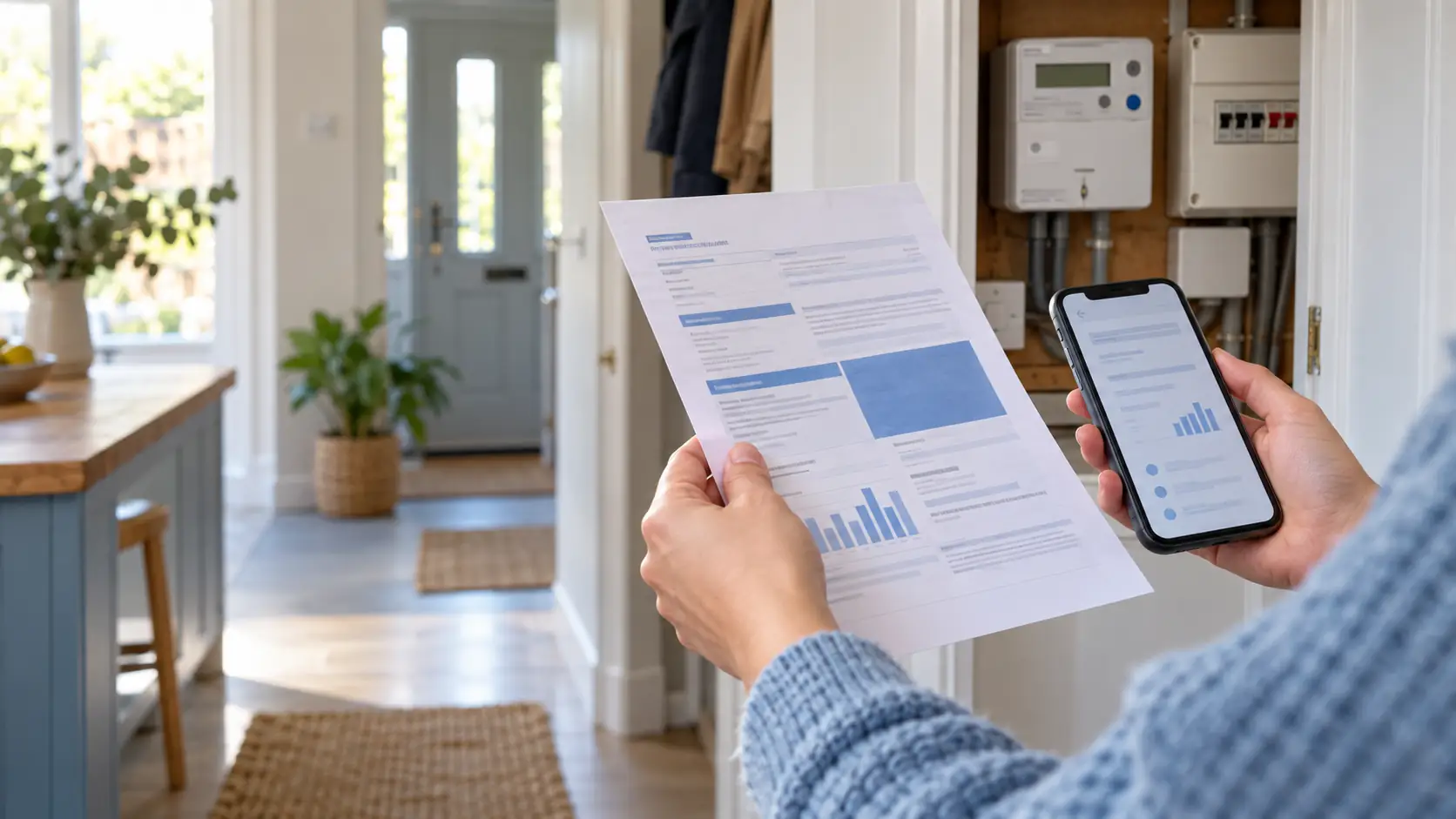
How to find your electricity supplier
Start with paperwork already linked to the property. A recent electricity bill, welcome letter, payment reference, supplier email or the existing online account normally names the supplier. If you have just moved in, ask the landlord, letting agent, seller or previous occupier for a recent bill, but verify it because the supplier may have changed.
If there is no reliable bill, identify the local electricity network operator using the Energy Networks Association postcode tool. In Great Britain, this company owns and operates the local distribution cables; it is not necessarily the company that sells you electricity. Follow the operator’s link or instructions to use its “find my supplier” service. Some services give an immediate result, while others may ask you to submit property details.
Contact the named supplier through the contact details on its official website. Give the full address, the date you became responsible for the property and an opening meter reading. Ask the supplier to confirm the tariff, payment method, meter details and electricity supply number before arranging payment or a switch.
- Step 1: check a recent bill, account, email or moving document.
- Step 2: use the Energy Networks Association postcode tool to find the network operator.
- Step 3: use the network operator’s supplier lookup, then contact the named supplier.
Supplier, network operator and meter operator: what is the difference?
The supplier buys energy and charges the household. Contact it about bills, tariffs, payments, account details, meter readings, moving home and most meter problems. The distribution network operator, often shortened to DNO, maintains the regional electricity network. Contact the network operator about a power cut, damaged overhead lines, a new connection or finding the supplier registered to an address.
A meter may display another company name, and a previous bill may carry an old brand. That does not prove who currently supplies the property. Meter installation and maintenance can involve separate organisations, while a supplier can rebrand or transfer customers. Use the registered supplier lookup when the evidence conflicts.
For example, a new occupier might see one company’s sticker on the meter and a different name on an old letter. The postcode lookup identifies the network operator; its supplier service identifies the company currently registered for that electricity supply. The occupier should contact that registered supplier rather than guessing from the sticker.
What is an MPAN and where can you find it?
In Great Britain, the Meter Point Administration Number identifies an electricity supply point. It is also called the electricity supply number. Ofgem says the network operator can provide it when you ask for supplier details. A bill usually shows the MPAN in a box or grid; the core number is the long numeric sequence used to identify the address in electricity-market records.
Do not confuse the MPAN with the meter serial number. The MPAN identifies the supply point in industry records, while the serial number identifies the physical meter. The serial number is normally printed on the meter and should match the meter details on the bill. Replacing a meter can change its serial number without changing the property’s supply point.
An in-home display is not the electricity meter and is not a reliable place to look for the MPAN. If a bill appears to be for the wrong property or meter, ask the network operator for the registered MPAN and ask the supplier to compare it with the account and meter serial number. Do not share a full supply number publicly because it is account-related information.
What to do when you move into a property
On the day responsibility begins, photograph the electricity meter and record its reading, serial number, date and time. Use the fixed meter, not the portable smart-meter display. Keep evidence of the tenancy or completion date. These records help separate your usage from that of the previous occupier and provide a starting point for checking the first bill.
Contact the existing supplier promptly and explain that you have moved in. Citizens Advice says a new occupier is automatically placed on a deemed contract with the current supplier, normally its default or standard variable tariff. You can then agree another tariff with that supplier or switch, but first make sure the account starts on the correct date and reading.
If the property has a prepayment meter, contact the supplier before using an old key or card where possible. The supplier can set up the new occupier, arrange the correct top-up method and remove any debt collection linked to the former account. Never accept responsibility for a previous occupier’s debt simply because it appears on the meter or account.
Northern Ireland uses a different lookup and number
Northern Ireland has a separate electricity market and network arrangements, so the Great Britain DNO and MPAN route does not apply. NIE Networks provides a Find My Supplier service for Northern Ireland properties. Its form asks for the house number, postcode and email address to identify the current supplier.
To request the property’s Meter Point Reference Number, or MPRN, the NIE Networks form also asks for the meter serial number. In this context MPRN is the Northern Ireland electricity supply identifier; do not confuse it with the gas MPRN terminology used in Great Britain. If the online form is unsuitable, use the contact details published by NIE Networks.
Checks to make before paying the first bill
Check that the billed name, address, responsibility date, meter serial number and opening reading match your records. Confirm whether the bill uses an actual or estimated reading and whether a single-rate or multi-rate tariff is recorded. For an Economy 7 or other two-rate meter, provide both registers and ask the supplier which is charged at each rate.
Then compare the unit rate, standing charge and billed usage with the confirmed tariff. Use the electricity bill calculator with your own readings and rates for a quick independent estimate. A difference can be caused by tariff changes, estimated readings, two-rate timing, discounts or supplier rounding, but a wrong MPAN, serial number or opening reading needs prompt correction.
If you cannot resolve a mismatch, make a formal complaint to the supplier and keep copies of readings, photographs, bills and messages. Contact Citizens Advice for consumer help in England, Scotland or Wales, or the Consumer Council for Northern Ireland for Northern Ireland-specific support.
Electricity supplier and MPAN FAQs
Can I find my electricity supplier from the meter serial number?
Not reliably from the serial number alone. In Great Britain, use your postcode to find the network operator and then its registered-supplier service. In Northern Ireland, NIE Networks can use the property details and meter serial number to return the supplier and MPRN.
Is my electricity supplier the same as my network operator?
Usually not. The supplier bills you and manages your tariff. The network operator maintains local cables, deals with power cuts and can direct you to the supplier registered for the property.
Is the MPAN printed on the electricity meter?
Do not assume it is. The MPAN or supply number is normally on an electricity bill and can be confirmed by the network operator. The number printed prominently on the meter is usually its separate meter serial number.
Can I switch supplier as soon as I move in?
Yes, once you are responsible for the property you can choose another tariff or supplier. First contact the existing supplier with the move-in date and opening reading so your initial account and usage are recorded correctly.
What if the supplier says the wrong meter is registered?
Compare the meter serial number and supply number with the bill and the network operator’s record. Photograph the meter and reading, then ask the supplier to investigate and correct the account. Keep a written record and use the formal complaints process if needed.
Estimate your electricity bill
Once the supplier confirms your tariff, enter the opening and latest meter readings, unit rate, standing charge and number of days. This gives you an independent estimate to compare with the first bill.
Sources
The supplier-lookup routes, supply-number terminology and moving-home steps were checked against these official and consumer-advice sources on 30 September 2026: