

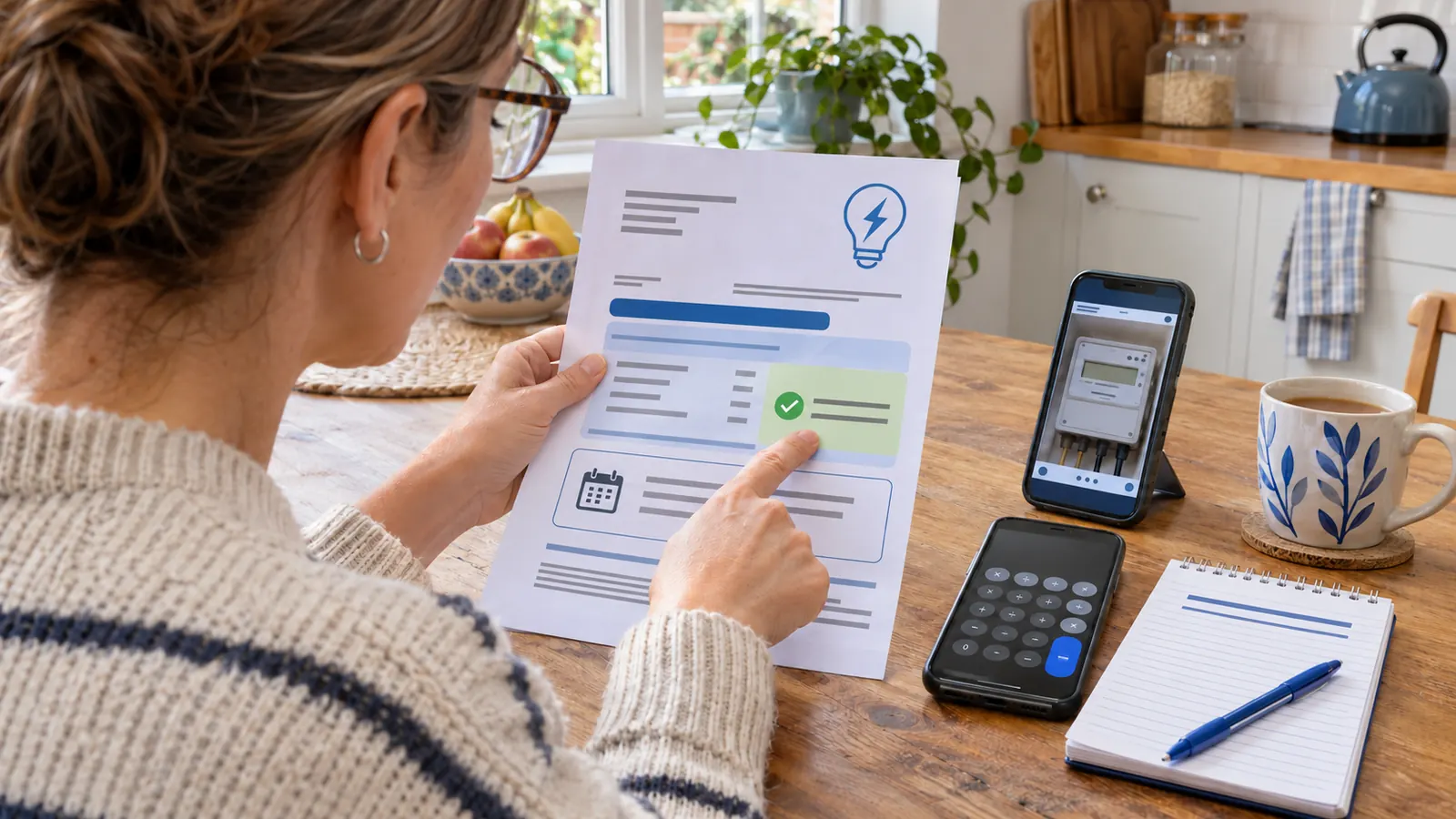
What does it mean when an energy account is in credit?
A credit balance means the payments added to your account are greater than the charges posted to it. This is common with a fixed monthly Direct Debit: the payment stays level while electricity use is usually lower in summer and higher in winter.
Credit is not the same as a discount, and it does not always mean the whole displayed amount is spare. Your online balance may not yet include electricity used after the last bill. An estimated bill can also make the balance look too high or too low until an actual reading is applied.
Start with the date and type of the latest meter reading. If the bill says estimated, submit a current reading and wait for the account to be recalculated. Check both registers if you have Economy 7 or another multi-rate meter.
How much credit should you leave on the account?
There is no single correct buffer for every household. Think about when the balance was measured, whether recent use has been billed, your monthly payment, expected winter use and any tariff change. Credit built in late summer may be part of the supplier's plan for paying larger winter charges.
A useful check is: possible surplus = displayed credit minus unbilled charges minus the buffer you choose to keep. The result is an estimate, not a supplier statement, so use current readings and your own rates.
Worked example: an account shows £240 credit. Charges since the last bill are estimated at £55, and the customer chooses to leave a £100 winter buffer. £240 − £55 − £100 leaves a possible £85 refund. Asking for £85 rather than the full £240 reduces the chance that the account immediately moves into debt.
Choose a different buffer if you can manage larger winter payments. The important point is to understand what has and has not been billed.
How to request an energy credit refund
In Great Britain, Ofgem says you can contact your supplier to claim credit back at any time. Citizens Advice recommends providing an up-to-date meter reading. Use the supplier's app, online account, email or phone service, and keep a copy of the request.
State the reading, its date, the balance shown after rebilling and the exact amount you want returned. Ask when and how the payment will arrive. Also ask the supplier to review the monthly Direct Debit if the account repeatedly builds more credit than is needed.
Do not cancel the Direct Debit simply to recover the balance. That can affect a payment-method discount or leave new bills unpaid.
- Photograph or record every relevant meter register and the date.
- Check the latest bill uses that reading rather than an estimate.
- Estimate charges since the bill and decide what seasonal buffer, if any, to retain.
- Request a specific refund and a Direct Debit review in writing.
- Save the bill, balance screenshot, reading and complaint reference.
Can an energy supplier refuse to refund credit?
A Great Britain supplier should refund a domestic credit balance when asked unless it considers that not doing so is fair and reasonable. If it refuses, it must explain why. A small credit likely to be used by forthcoming winter charges can be a reasonable concern, but a refusal should relate to the facts of your account.
Ask for the calculation behind the decision: the reading used, unbilled consumption, annual forecast, tariff rates and the amount the supplier says must remain. Correct any estimated reading or outdated forecast. You can also request a partial refund or a lower Direct Debit if that resolves the problem.
Do not treat a debit on one fuel as automatically settled by credit on another without checking the account terms. On a dual-fuel account, ask the supplier to show how it has combined the two balances.
What if the credit keeps building up?
Repeated surplus credit often points to a monthly payment based on an old usage forecast, estimated readings or rates that have changed. Compare the supplier's annual kWh forecast with recent actual use and check the tariff end date, unit rate and standing charge.
Ofgem's Direct Debit compliance work says suppliers should review payment adequacy regularly and use surplus credit to reduce future payments or return it. Ask for the next review date and a written explanation of the new amount.
A refund fixes the balance today; correcting the forecast helps stop the same problem returning. Our guide to energy Direct Debits explains how to check the annual calculation.
How to complain about a refused or delayed refund in Great Britain
Make a formal complaint to the supplier, not just a routine customer-service query. Attach the current reading, recent bills, balance screenshot and refund request. Say what outcome you want: a corrected bill, the refund, a payment review and an explanation of any refusal.
If the complaint remains unresolved after eight weeks, or the supplier sends a deadlock letter sooner, you can take it to the Energy Ombudsman. Its service is free and impartial. It can require practical action, including applying credit or correcting an account, and may make a financial award.
Closed accounts have separate final-bill deadlines and compensation standards. Use our final energy bill guide for those steps.
Northern Ireland has a separate process
Ofgem and the Energy Ombudsman route above cover England, Scotland and Wales, not Northern Ireland. Northern Ireland has its own electricity market and Utility Regulator. Ask your supplier to update the account with an actual reading, explain the balance and return any surplus credit under its terms.
If the supplier does not resolve the matter, make a formal complaint to it first. The Consumer Council can investigate unresolved Northern Ireland electricity billing complaints free of charge. Keep the same evidence: readings, bills, balance screenshots, refund requests and the supplier's response.
Energy credit refund FAQs
Can I ask for all of my energy credit back?
You can ask, but first check for unbilled usage and upcoming seasonal charges. In Great Britain, the supplier can refuse only where it considers that fair and reasonable, and it must explain the decision. A partial refund may avoid moving straight into debt.
Will an energy credit refund increase my Direct Debit?
It can if the remaining balance is not enough for the supplier's forecast costs. Ask for the refund and Direct Debit review together, using current readings and realistic annual use, so you can see the effect before agreeing.
How long does an energy credit refund take?
Timescales for an active account vary by supplier and payment method, so ask for a date when you request it. Closed accounts have separate Great Britain final-bill and refund standards. Complain if an active-account refund is unreasonably delayed.
Is credit protected if my supplier goes bust?
Domestic credit balances are normally protected through Ofgem's Supplier of Last Resort process in Great Britain. Wait for the appointed supplier to explain how the balance will be handled and keep copies of your latest statements and readings.
Estimate your electricity bill
Use the electricity bill calculator with your latest readings, unit rate and standing charge to estimate charges since the last bill. Subtract that unbilled amount from the displayed credit before deciding how much is genuinely spare.
Sources
Credit-balance, refund and complaint guidance was checked against these sources on 9 November 2026:
- Ofgem: How your electricity or gas bill is calculated
- Ofgem: Direct Debit Market Compliance Review progress update
- Citizens Advice: Claim back credit from your energy supplier
- Energy Ombudsman: How to raise a dispute
- Northern Ireland Utility Regulator: Energy supplier customer service levels
- Consumer Council: Complaints about electricity, oil and gas