

What a final energy bill should show
Your old supplier produces a final bill when it stops supplying your home or you stop being responsible for the address. The bill should bring together electricity used up to the closing date, standing charges, payments already made, discounts or adjustments and the remaining account balance.
A debit balance means the account still owes money. A credit balance means the supplier owes you money because your payments were more than the final charges. Download the final bill and earlier statements because they are useful if you later challenge a reading, payment or refund.
Give the supplier a reliable closing reading
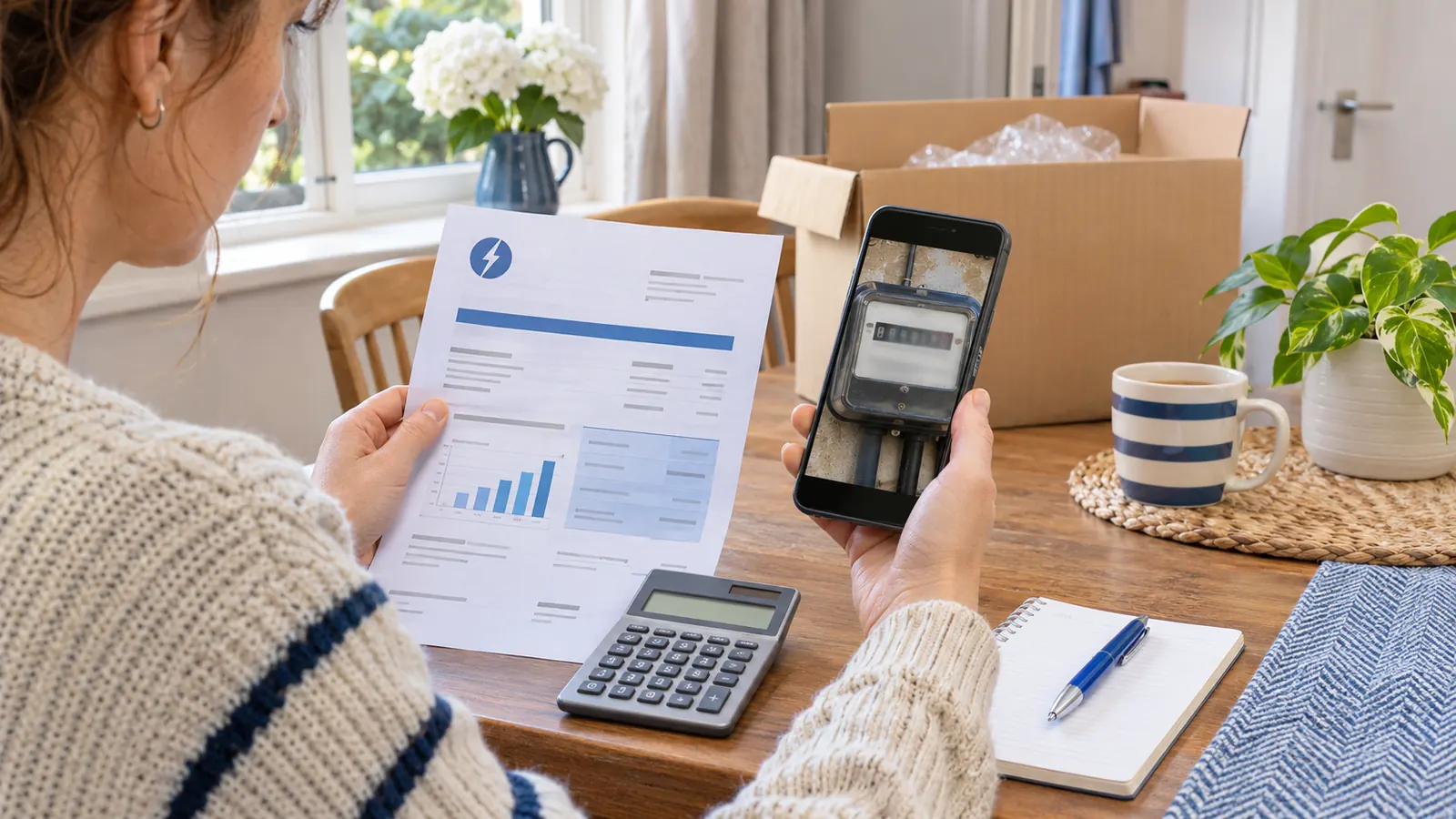
Take a meter reading on the day you switch or stop being responsible for the property. Photograph the full display and, if visible, the meter serial number. For Economy 7 or another multi-rate meter, record every register and label it exactly as the display does.
Send the reading through the supplier’s stated channel and keep its confirmation. If you are moving, give a forwarding postal address and email address. During a switch, the new supplier normally passes an agreed opening reading to the old supplier so both accounts use the same boundary.
Do this even with a smart meter. A smart meter can temporarily stop communicating, and the dated photograph gives you evidence if the final bill is based on an estimate. If the supplier uses a different reading, ask where it came from and request a corrected bill when necessary.
How to check the final electricity calculation
Start with the bill’s dates and meter serial number. Then compare the closing reading with your photograph, check whether it is marked actual or estimated, and confirm every unit rate and standing-charge day. Make sure payments made shortly before closure have reached the account.
For a single-rate meter, calculate usage as: closing reading − previous actual reading. Multiply the result by the unit rate. Calculate the standing charge as: number of billing days × daily standing charge. Add the two amounts, apply any bill adjustments shown, then compare the total with the payments and credit already on the account.
For example, suppose the previous actual reading was 9,840 kWh and the closing reading was 9,972 kWh. Usage is 132 kWh. At a hypothetical 26p per kWh, that costs £34.32. Add 21 days at a hypothetical 55p standing charge, or £11.55, for £45.87 before any other adjustments. If the account held £70 after its last payment, the remaining credit would be £24.13.
The Great Britain six-week final-bill deadline
For a household account in England, Scotland or Wales, the old supplier must take reasonable steps to send the final bill within six weeks of the supply ending or the contract closing. The rule covers accounts closed after a supplier switch and accounts closed because you moved.
If the supplier misses that deadline, it should automatically pay £40 under Ofgem’s guaranteed standards. If the payment does not arrive within 10 working days of the missed standard, a further £40 is due. Contact the old supplier with the account number, closure date, closing reading and forwarding address, and keep the message or call reference.
When the supplier must refund your credit
In Great Britain, the supplier should return the closed account’s credit within 10 working days of sending the final bill. Check the bill for the amount and the proposed payment method. If bank details have changed or the old Direct Debit has been cancelled, contact the supplier rather than waiting for a payment that cannot complete.
A late credit refund triggers another automatic £40 payment. If that compensation is not paid within 10 working days, a further £40 is due. You can claim credit even if the account closed a long time ago; gather an old bill, account number and former address. If a supplier has failed, Ofgem’s safety-net process protects domestic customer credit and the new supplier will explain how it will be returned.
What to do if the bill or refund is wrong
Write to the supplier with a short list of the disputed items and the correction you want. Attach the meter photograph, payment evidence and proof of the date you moved or switched. If part of the bill is not disputed, ask how to pay that amount while the supplier investigates the rest.
Use the supplier’s formal complaints process if the first contact does not resolve the problem. Ask for a written response and keep a timeline. After eight weeks, or sooner with a deadlock letter, you can take an unresolved Great Britain complaint to the Energy Ombudsman. If you cannot afford a valid final balance, ask the supplier for an affordable repayment arrangement.
Northern Ireland has different final-bill rules
Northern Ireland has its own electricity market and is regulated by the Utility Regulator, not Ofgem. The Utility Regulator says your old supplier should send a final bill within six weeks of a switch and refund money left in the account or prepayment meter within six weeks.
The automatic Ofgem £40 payments do not apply in Northern Ireland. Keep the closing reading, meter serial number and switch or move date. If the bill or refund is late, use the supplier’s complaints process; the Consumer Council can provide free help with an unresolved electricity complaint.
Final energy bill FAQs
How long should a final energy bill take?
For a household account in Great Britain, the old supplier should send the final bill within six weeks. Northern Ireland’s Utility Regulator also states a six-week final-bill period, but the complaint and compensation framework is different.
How quickly must final-bill credit be refunded?
In Great Britain, credit should be returned within 10 working days of the final bill being sent. In Northern Ireland, the Utility Regulator says money left in the account or prepayment meter after a switch should be refunded within six weeks.
Is final energy bill compensation automatic?
The £40 guaranteed-standard payment in Great Britain should be automatic when a supplier misses the relevant final-bill or refund deadline. Contact the supplier if it is not paid. Those Ofgem standards do not apply in Northern Ireland.
What if my final bill uses an estimated meter reading?
Send the supplier your dated closing photograph and ask it to explain or correct the estimate. Check the meter serial number, all rate registers and the date responsibility ended before accepting a revised bill.
Estimate your electricity bill
Use the electricity bill calculator with your closing and previous actual meter readings to estimate the final usage charge. Add the standing charge for the exact billing days, then compare the result with the supplier’s bill and your account balance.
Sources
Final-bill deadlines, refund rules, compensation and the separate Northern Ireland position were checked against these sources on 4 November 2026:
- Ofgem: Get compensation for problems switching energy suppliers
- Ofgem: How your electricity or gas bill is calculated
- Citizens Advice: Check if your previous energy supplier owes you money
- Energy Ombudsman: Information for disputes with energy suppliers
- Utility Regulator: Switching energy suppliers in Northern Ireland
- Consumer Council: Complaints about electricity, oil and gas