

What is the Electricity Bill Discount Scheme?
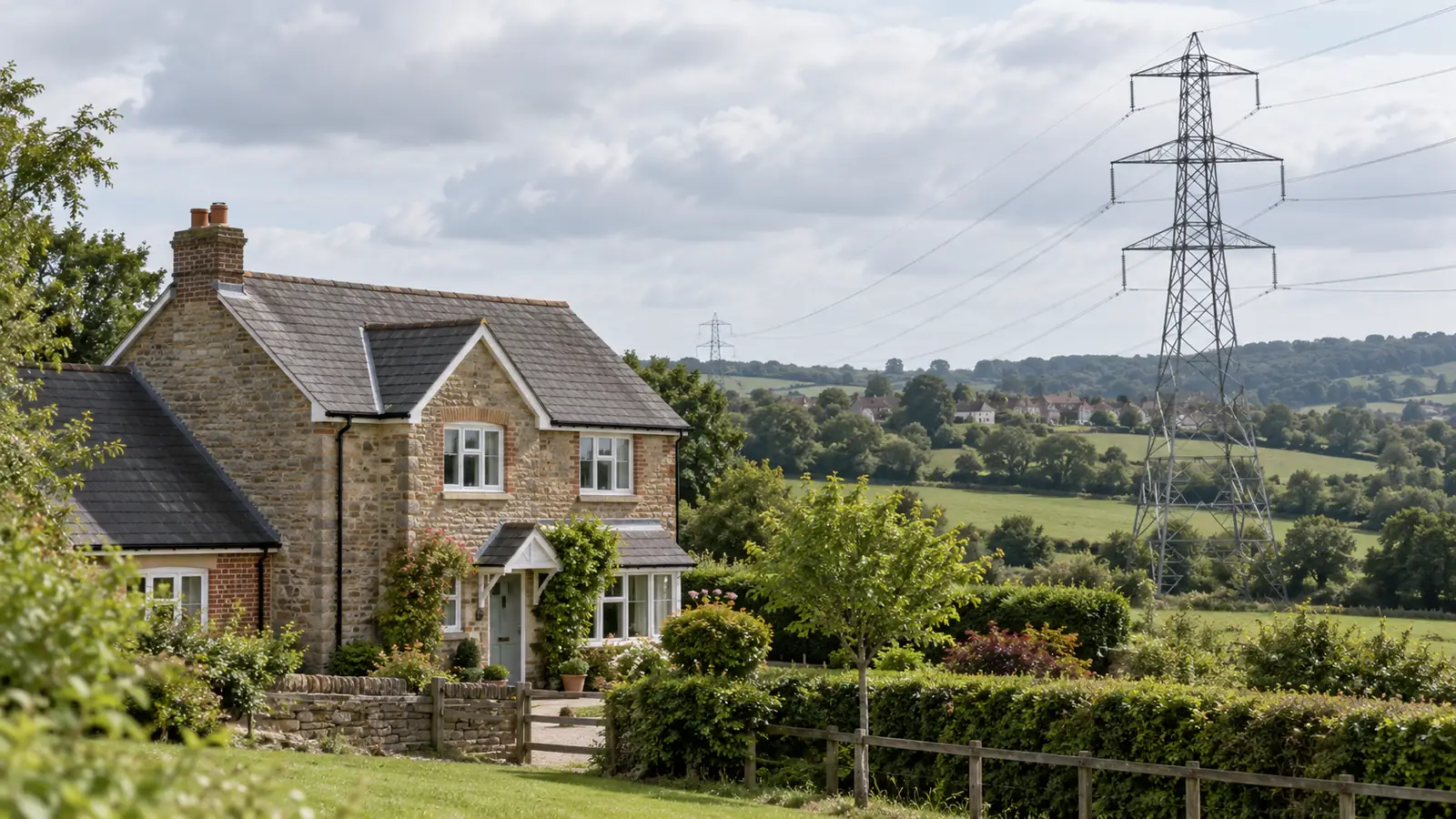
The Electricity Bill Discount Scheme, also called the Bill Discount Scheme, is a government programme for communities living closest to certain new electricity transmission projects. It recognises the local impact of infrastructure needed to move large amounts of power around Great Britain, such as new overhead lines, pylons, substations and converter stations.
An eligible property could receive up to £250 each year for up to 10 years. That means the maximum headline value is £2,500 over the full period: £250 × 10 years. It is not a universal energy rebate, compensation for every existing pylon or a payment based on income or benefits.
The government expects payments for the first qualifying projects to begin in the first half of 2027. The scheme must still be established through secondary legislation approved by Parliament, so treat the published design as the intended process rather than a benefit that is already payable.
Who could qualify for the £250 electricity discount?
The starting test is the property, not the householder's income. It must be in England, Scotland or Wales and fall within the final 500-metre eligibility zone for qualifying new or significantly upgraded onshore transmission infrastructure. The relevant works must be developed by a licensed transmission owner and, under the current design, start main construction on or after 10 March 2025 and before 1 January 2040.
The project must actually qualify and start main construction before Ofgem can finalise the zone. Early site clearance, surveys, archaeological work or temporary access works do not count as main construction. The government has published an initial, non-exhaustive list of projects expected to qualify, but inclusion on that list is an indication rather than confirmation for a particular address.
The property must also exist at the point the zone is fixed. For the automatic route, it should have had a domestic Meter Point Administration Number, or MPAN, before the project's construction start date. A new home built afterwards is not brought into the scheme simply because it falls inside the mapped area.
- Check the official expected-project list rather than relying on a developer leaflet or social-media map.
- Wait for the final eligibility map after main construction begins; straight-line distance guessed from a pylon is not decisive.
- Keep your supplier contact details current so you do not miss an eligibility or voucher notice.
- Do not pay anyone to register your address or “secure” a discount before the official process opens.
How is the 500-metre distance measured?
The 500 metres is measured from the boundary of the qualifying works, not necessarily from the centre of a pylon or substation. For a linear project such as an overhead line, the proposed zone runs 500 metres from the edge of the project's limit of deviation in its planning permission. For a substation or converter station, it is measured from the external perimeter of the security fence once construction has started.
The transmission owner will supply geospatial data and the confirmed construction date to Ofgem, which is the intended scheme administrator. Ofgem will use that data to map the zone and associate eligible properties with their electricity MPANs. This is why an online measuring tool can provide only a rough indication.
A property inside two project zones is not expected to receive two discounts at once. The proposed rules assign it to the project with the earlier construction start date. Once discounts begin, the intention is that the qualifying property receives the benefit for the full 10-year eligibility period, subject to the final regulations.
How and when will the discount be paid?
Most eligible households with a standard domestic electricity contract should be placed in the automatic scheme. The current design provides two £125 payments in each scheme year. Your supplier should notify you, apply the benefit through two payment windows and show a notice on the bill or statement after each payment.
Smart prepayment customers should also receive the benefit through the automatic route. For a traditional prepayment meter, suppliers may issue two £125 energy vouchers or four £62.50 vouchers where meter credit limits make smaller amounts necessary. Proposed vouchers must remain valid for at least six months, so check messages from your supplier and redeem them before the stated expiry date.
A minority of eligible homes do not have a standard domestic electricity contract. The proposed opt-in route would allow those residents to apply to Ofgem for one annual £250 bank payment or cash voucher. The application process is not open yet, and final guidance should explain the evidence required.
If you switch supplier between the qualifying date and the payment window, the supplier you were with on the qualifying date is expected to remain responsible for that instalment. Keep the final statement and any eligibility notification until the payment has arrived.
What happens if a landlord pays the electricity bill?
The intended beneficiary is the resident of the eligible property. Where a landlord, letting agent, management company or another intermediary receives the automatic discount under a formal tenancy or licence, the proposed rules require reasonable steps to pass it through to the occupier. This could be a bank transfer within 30 days or a documented reduction in a service charge.
The position is less direct for informal arrangements, lodgers and some houses in multiple occupation. The government says sharing is expected in several of those cases but may not be legally mandatory. Purpose-built student accommodation, care or nursing homes and some other multiple-occupancy buildings on commercial meters are expected to be excluded because the benefit cannot practicably be delivered to individual residents.
Keep the supplier notice, tenancy agreement and service-charge statements if someone else pays the account. The planned process gives affected people a route to ask Ofgem to review certain decisions, but final guidance and regulations should be checked before relying on a legal remedy.
Is the discount taxable or available in Northern Ireland?
The government announced on 28 October 2026 that it intends to exempt these scheme benefits from Income Tax. The change is due to be made through the Finance Bill 2026-27 and is intended to apply from the 2026 to 2027 tax year onwards. That measure is designed so eligible households receive the full £250 without dealing with Self Assessment for the benefit.
The transmission-infrastructure Bill Discount Scheme applies to England, Scotland and Wales, not Northern Ireland. Northern Ireland has a separate electricity market and its own Household Electricity Discount Scheme; that is a different programme with different funding, amounts and eligibility. Do not use Northern Ireland's £63 payment guidance to judge eligibility for this £250 scheme.
What should you do now?
First, look for the project name on the government's expected eligible projects page. If it appears, follow official updates from DESNZ, Ofgem and the transmission owner. Do not assume an address qualifies until the project has started main construction and Ofgem has confirmed the mapped zone.
Second, check that the address and meter details on your electricity account are correct. Your MPAN is usually printed on the bill and identifies the electricity supply point. If the bill shows the wrong address or meter, raise it with the supplier through the normal correction or complaints process rather than waiting for this scheme.
Finally, treat unexpected application links cautiously. The government says most households will not need to take action. A genuine opt-in process should be published by Ofgem; no legitimate message should require an upfront fee or pressure you to disclose bank details immediately.
Electricity Bill Discount Scheme FAQs
Can I apply for the Electricity Bill Discount Scheme now?
No. The opt-in process is not open, and most eligible households are expected to receive the discount automatically. Wait for confirmation from your supplier, Ofgem or the government.
Does every home within 500 metres of a pylon qualify?
No. The infrastructure must be part of a qualifying new or significantly upgraded transmission project, main construction must have started, and the property must fall inside Ofgem's final mapped zone.
Will I receive £2,500 at once?
No. £2,500 is the maximum headline total over 10 years. The automatic route is expected to pay £125 twice a year, while eligible opt-in households should receive £250 once a year.
Is the £250 discount based on income or benefits?
No. The scheme is based principally on an eligible property's proximity to qualifying transmission infrastructure, not household income or benefit status.
What if I use a prepayment meter?
Eligible smart prepayment customers should be paid automatically. Traditional prepayment customers may receive two £125 vouchers or four £62.50 vouchers each year, depending on meter credit limits and the supplier's delivery method.
Estimate your electricity bill
Use the electricity bill calculator to check your normal usage charges before any discount. A standard automatic payment is expected to be £125 twice a year, so record it separately from the unit-rate and standing-charge calculation on your bill.
Sources
The eligibility, proposed payment routes, timetable and tax treatment were checked against these government and Ofgem sources on 1 November 2026. Some delivery details remain subject to legislation: