

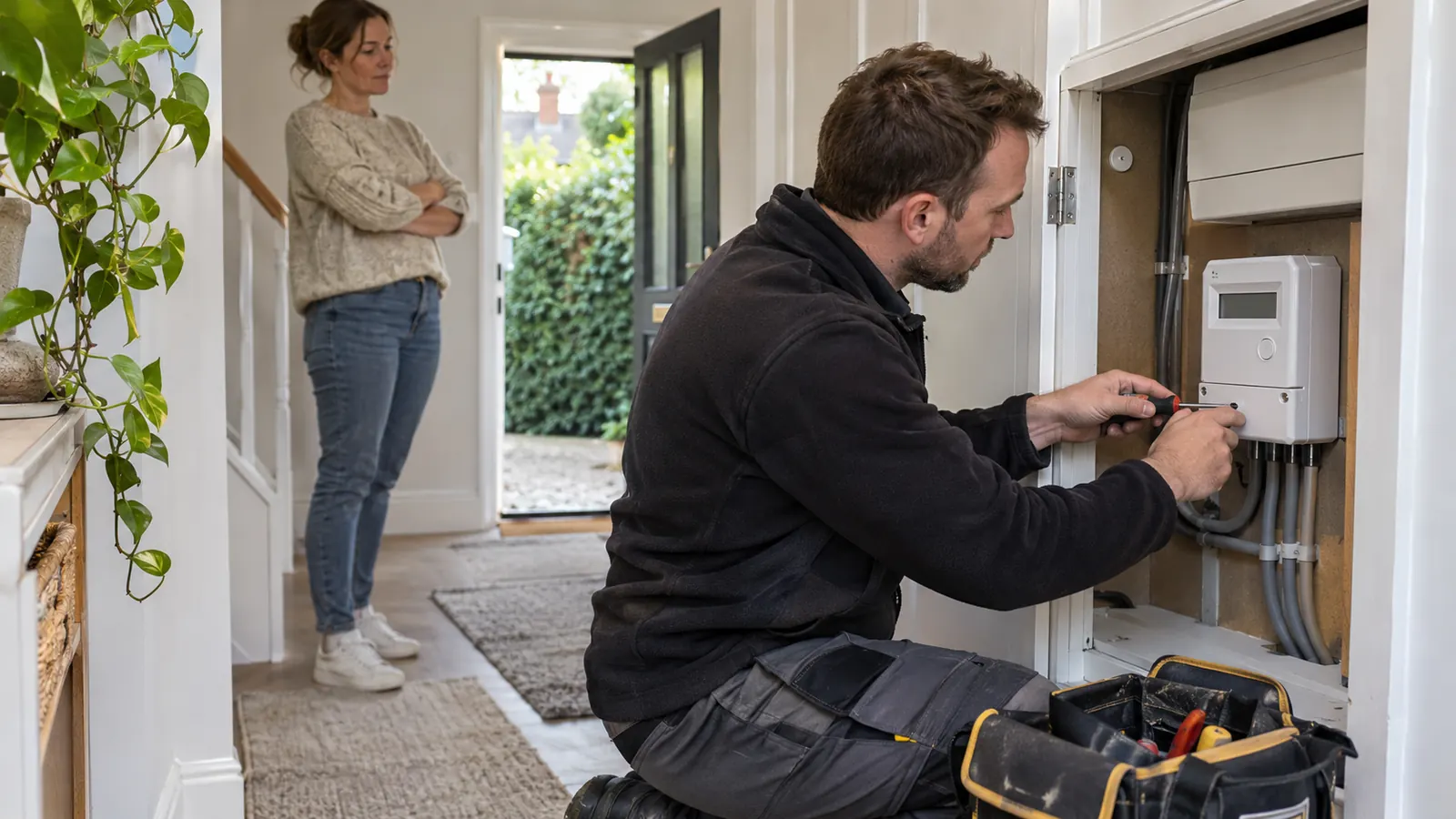
Can you refuse a smart meter?
A routine invitation is not the same as a legal demand. Citizens Advice says households in England, Scotland and Wales do not have to accept a smart meter if they do not want one. You can decline now and ask for one later without an installation charge.
There are practical limits. Ofgem expects suppliers to install a smart meter when fitting a meter for the first time or replacing one, unless there is a good reason not to. If an old meter is unsafe, faulty, has reached the end of its certified life or relies on obsolete technology, the supplier still has to keep the metering safe and accurate. Traditional replacement stock may not be available.
Ask the supplier to separate two questions: why the existing meter must be changed, and whether the replacement must send automatic readings. Citizens Advice says you can ask whether the extra smart functionality can be switched off, so the meter works more like a traditional meter. The supplier should explain what it can offer at your property.
What you give up if you say no
Refusing does not normally interrupt your supply. You will still need to provide manual readings and check bills for estimates. You may also have fewer tariff choices because time-of-use, electric-vehicle and other flexible tariffs depend on detailed smart meter readings.
A smart meter does not reduce a bill by itself. It can remove routine estimated readings and show when electricity is being used, but savings depend on your tariff and what you do with that information. Compare the whole tariff, including unit rates, standing charges and exit fees, rather than accepting an installation only because a cheaper headline rate is advertised.
When a supplier says replacement is necessary
Ask for the reason in writing. Useful questions include whether the meter has failed a safety check, is no longer certified, cannot support the property’s tariff, or is part of a technology replacement programme. Radio Teleswitch Service support has ended, for example, so affected heating and hot-water meters need urgent replacement rather than a simple refusal.
Record the existing meter serial number and reading before the visit. Photograph them if it is safe to do so. After installation, keep the engineer’s paperwork, the final old-meter reading, the new serial number and the opening reading shown by the new meter. Check that all four appear correctly on the next statement.
If the explanation does not make sense, make a formal complaint before treating the appointment as optional. A disagreement about smart features should not be allowed to leave an unsafe meter in service.
Your rights when booking an installation
In Great Britain, contact your energy supplier rather than an unknown caller or doorstep salesperson. There should be no separate charge for a standard household smart meter installation. Citizens Advice says that, when you request a first smart meter appointment, the supplier should offer one within 30 working days if installation and remote readings are expected to work at the property.
The supplier must pay £40 if it misses a qualifying appointment, fails to offer it within the required period, changes it without your agreement with less than one working day’s notice, or sends someone without the necessary skills or equipment. A further £40 can be due if that payment is not made within 10 working days. Exceptions include properties where a smart meter cannot be installed or communicate, and cases where the customer has actively refused offers or prevented access.
Confirm the time window, how long supply is likely to be off, which meters are being replaced and how the installer will identify themselves. Tell the supplier in advance about restricted access, medical equipment, mobility needs, communication needs or anyone on the Priority Services Register.
What should happen during the visit
Government service expectations say installation should cause minimal disruption. The installer should carry out relevant safety checks, offer an in-home display, demonstrate the meter and display, provide instructions and explain how to get help. They should also give suitable energy-efficiency guidance, but must have your prior permission before discussing extra products or services.
The installer should leave the metering safe even if commissioning cannot be completed. If the smart connection does not work, ask what will operate in traditional mode, whether you must send readings, what the next repair step is and when it will happen. Do not sign to say everything works until you understand which functions were tested.
Check the first bill carefully. A meter exchange can fall between billing cycles, so the first statement may still contain an estimate. The closing reading for the old meter should connect to the opening reading for the new one without charging the same period twice.
Smart meter privacy and reading frequency
A smart meter records consumption; it does not store your name or address on the meter itself. The national smart metering network is separate from the public internet. Suppliers still need account information to bill you, but detailed usage data is controlled by a regulated access framework.
New electricity smart meters are commonly set to send half-hourly readings. Citizens Advice says you can ask to change electricity reporting to daily. Half-hourly data can be necessary for some flexible tariffs, so find out whether changing the setting would change the tariff before you decide.
Ask the supplier to explain which data it needs for billing, which uses require your permission and how to change your choice later. If privacy is the main concern, discussing the reading setting may solve the problem without refusing the replacement itself.
Smart meters in rented homes
If you rent and your name is on the energy account, government guidance says you should be able to book an installation where a smart meter is expected to work. Ofgem recommends telling the landlord first. Check the tenancy agreement because it may contain a clause about altering the meter or energy supply.
A landlord should not unreasonably prevent an installation where the agreement requires permission. Explain that the supplier owns or controls the meter and ask the landlord to put any technical objection in writing. If the landlord pays the supplier and includes energy in your rent, the choice belongs to the landlord because they are the account holder.
Do not agree to building work, move a meter cupboard or pay a private installer as part of a standard meter exchange without clear written confirmation from the supplier and landlord.
Prepayment and accessibility checks
A household already using prepayment will normally receive a smart meter in prepayment mode. Installation does not erase debt, emergency credit or repayment arrangements. Before the engineer leaves, confirm how to see the balance, top up online and in person, activate emergency credit and restore supply after credit is added. Keep the physical top-up card or key as a backup if one is provided.
Tell the supplier if prepayment is unsafe or impractical for anyone in the household. Government guidance says a smart meter should only operate in prepayment mode when that method is safe and workable for the customer. Ask about an accessible in-home display or another suitable way to monitor usage and credit.
Northern Ireland follows a separate rollout
The Great Britain appointment and compensation rules above do not automatically apply in Northern Ireland. The Consumer Council says NIE Networks and electricity suppliers will contact consumers when it is time for their smart electricity meter to be installed, and households do not need to register for the rollout.
Wait for information from your supplier or NIE Networks, check the identity of anyone requesting access and use Northern Ireland guidance for complaints or support. A keypad prepayment meter is not necessarily a smart meter connected to the planned Northern Ireland system.
Smart meter choice and installation FAQs
Do I legally have to have a smart meter in the UK?
In England, Scotland and Wales, you can normally refuse a routine offer. A necessary replacement is different: your supplier may still have to replace an unsafe, faulty, expired or obsolete meter, and the available replacement will usually be smart. Northern Ireland has a separate rollout.
Can my landlord refuse a smart meter?
If you pay the supplier, you should normally be able to arrange one, although you should check the tenancy agreement and tell the landlord. A permission clause should not be used unreasonably. If the landlord pays the energy account, the decision is theirs.
Does a smart meter installation cost money?
There is no separate charge for a standard household installation arranged through your energy supplier. Do not pay an unsolicited caller or private installer who claims a fee is required.
Can I turn off automatic smart meter readings?
Ask the supplier about limiting smart functionality or changing electricity readings from half-hourly to daily. The available setting and its effect on flexible tariffs should be explained before you decide.
What should I keep after a smart meter is installed?
Keep the old meter’s final reading and serial number, the new meter’s opening reading and serial number, the appointment paperwork and any fault reference. Check them against the first bill after the exchange.
Estimate your electricity bill
Take a dated reading from the old meter before the installer starts and another from the new meter once it is commissioned. Use the electricity bill calculator with the closing and opening readings, your unit rate, billing dates and standing charge to check that the meter change has not created a gap or overlap in your bill.
Sources
Smart meter choice, installation, appointment, privacy, tenancy and Northern Ireland guidance was checked against these sources on 13 November 2026:
- GOV.UK: Smart meters — how they work and consumer protections
- GOV.UK: Smart meters — your rights and expectations
- Citizens Advice: Getting a smart meter installed
- Ofgem: Get help with your smart meter
- UK legislation: Smart meter supplier standards amendment 2026
- Consumer Council: Smart meters in Northern Ireland