

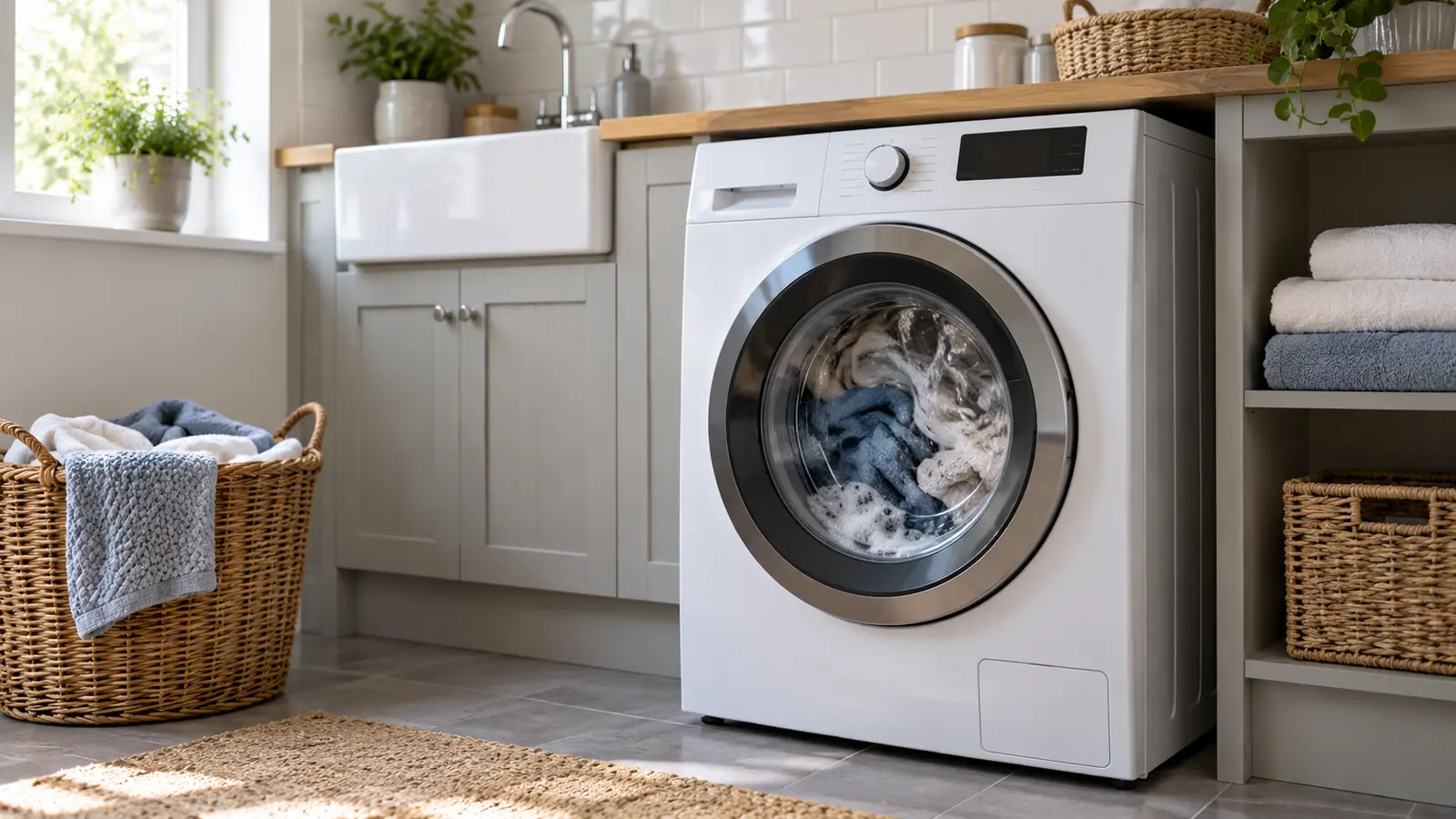
How much does a washing machine cost to run?
At Ofgem’s Great Britain Direct Debit comparison rate of 26.32p per kWh for 1 October to 31 December 2026, a washing machine using 0.51 kWh costs about 13p per eco cycle. A 0.68 kWh cycle costs about 18p, while a 0.90 kWh cycle costs about 24p. These are worked examples based on energy-label figures, not universal prices for every machine or programme.
The electricity cost does not include water, detergent, maintenance or the energy used by a separate tumble dryer. Water charges vary by household and region, so add them separately if you want a complete laundry cost. For an electricity comparison, use your machine’s stated kWh and the unit rate on your own tariff.
- 0.51 kWh cycle: 0.51 × 26.32p = 13.42p, or about 13p.
- 0.68 kWh cycle: 0.68 × 26.32p = 17.90p, or about 18p.
- 0.90 kWh cycle: 0.90 × 26.32p = 23.69p, or about 24p.
- Four 0.51 kWh cycles a week: 2.04 kWh and about 54p a week.
Calculate the cost from the energy label
Current washing-machine labels use an A-to-G efficiency scale and show weighted energy consumption in kWh per 100 washing cycles. Use: cost per load = label kWh ÷ 100 × electricity unit rate. If the label says 51 kWh per 100 cycles, dividing by 100 gives 0.51 kWh. Multiplying 0.51 by 26.32p gives 13.4232p, which rounds to 13.42p.
The label also helps you compare rated load capacity, water consumption per cycle, the duration of the eco 40-60 programme and spin-noise information. Compare machines with a capacity that matches your household. A low consumption figure for a small drum is less useful if it makes you run two loads instead of one.
UK ecodesign rules require washing machines to provide an eco 40-60 programme for normally soiled cotton laundry labelled washable at 40°C or 60°C. That programme is used for the standard energy measurements. A cotton, quick, intensive or hygiene cycle can consume a different amount, so check the manual or measure a representative cycle if you need a closer estimate.
Worked weekly, monthly and annual examples
Suppose a label shows 51 kWh per 100 cycles and the household runs four eco loads each week. Each load represents 0.51 kWh, so four loads use 2.04 kWh. At 26.32p per kWh, that costs 53.6928p, rounded to 54p a week.
Across 52 weeks, 208 cycles use 106.08 kWh. Multiplying by £0.2632 gives £27.920256, rounded to £27.92 a year. An average calendar month is about 17.3 cycles at this routine, costing roughly £2.33 in electricity.
For comparison, 208 cycles at 68 kWh per 100 use 141.44 kWh and cost about £37.23. At 90 kWh per 100, they use 187.2 kWh and cost about £49.27. The difference between the 51 and 90 kWh examples is about £21.35 a year, so weigh the purchase price, capacity, expected lifespan and repairability alongside the label.
Why programme, temperature and load matter
Much of a washing machine’s electricity is used to heat water, so a suitable lower-temperature wash can use less energy than a hotter programme. Energy Saving Trust advises that temperature and load size both affect consumption, while Citizens Advice recommends the economy cycle for general laundry and a lower temperature where appropriate.
Wait for a sensible full load, but stay within the manufacturer’s capacity and leave enough room for the laundry to move. Two lightly filled cycles will usually use more electricity and water than one suitable load. Overloading can reduce cleaning and rinsing performance and may lead to rewashing.
A quick wash is not automatically the cheapest cycle. It may save time by using a different pattern of heating, water and drum movement. Use the programme-consumption table in the manual, a smart plug suitable for the appliance load, or a whole-home energy monitor if you want to compare your own programmes.
Use your own electricity tariff
Ofgem’s 26.32p figure is an average comparison rate for a standard variable tariff paid by Direct Debit in England, Scotland and Wales. Actual unit rates vary by region, payment method, tariff and meter, while Northern Ireland has a separate electricity market. Copy the rate from your bill or tariff information for a personal calculation.
If you have Economy 7 or another time-of-use tariff, a cycle may cost less when it runs wholly in a cheaper period. Confirm the exact off-peak hours and rate rather than assuming electricity is cheaper throughout the night. Follow the appliance manufacturer’s instructions and do not trade away fire safety for a small tariff saving.
Do not add the household standing charge to every load. It is a separate daily charge for the supply and remains payable on a day when the washing machine is not used. Include it once when calculating the complete electricity bill.
Practical ways to reduce washing costs
Choose the eco 40-60 programme for suitable normally soiled cotton laundry, or a lower-temperature programme when the care labels and hygiene needs allow. Treat stains before washing, use the correct detergent dose and run a full but not overloaded drum. These steps can reduce unnecessary repeat washes.
When replacing a machine, compare the actual kWh per 100 cycles as well as the A-to-G class. Check capacity and water use too, then estimate annual electricity from the number of loads your household really runs. Replacing a working machine solely for a modest energy saving may take years to recover the purchase price.
Keep the filter and door seal clean and follow the maintenance cycle in the manual. A fault, blocked filter or recurring poor wash result needs investigation rather than repeated cycles. Register a new appliance so the manufacturer can contact you about a safety recall.
Use a washing machine safely
Electrical Safety First advises plugging a washing machine into a suitable wall socket rather than an extension lead, because a large appliance can overload an extension when used with other equipment. Stop using the machine and seek qualified advice if you notice scorching, a hot plug or socket, buzzing, repeated fuse failures or circuit-breaker trips.
Avoid leaving the washing machine running while you are asleep or away from home. Do not overload it, empty pockets before each wash and clean the filter as the manufacturer directs. These precautions matter even if an overnight tariff would make the electricity marginally cheaper.
Washing machine running cost FAQs
How much electricity does a washing machine use per load?
Divide the label’s kWh per 100 cycles by 100. A label showing 51 kWh per 100 eco cycles represents 0.51 kWh for the standardised weighted cycle. Other programmes and real loads can differ.
How much does one washing-machine cycle cost?
Multiply kWh per cycle by your electricity unit rate. At 26.32p per kWh, a 0.51 kWh cycle costs 13.42p. Use the rate on your own tariff for a personal result.
Is eco 40-60 cheaper than a quick wash?
Do not judge by duration alone. Eco 40-60 is the standard programme used for the label measurement, while quick programmes can use energy differently. Check the programme table in your machine’s manual or measure both cycles.
Should I run the washing machine at night?
Only a time-of-use tariff makes electricity cheaper at particular hours. Electrical Safety First advises avoiding overnight operation where possible; never assume a small saving outweighs safe use and the manufacturer’s instructions.
Does the washing-machine cost include the standing charge?
No. The standing charge is payable for the household electricity supply whether or not the machine runs. Add it once when estimating the full bill, not to every wash.
Calculate your appliance running costs
Enter watts and hours or kWh per cycle, then compare costs for different usage patterns.
Estimate your electricity bill
Add the washing machine’s calculated kWh to the rest of your household use when estimating the full bill. Use your actual unit rate and do not assign the daily standing charge to each load: you pay that charge whether or not the machine runs.
Sources
Tariff rates, washing-machine labelling rules, saving advice and safety guidance were checked against these sources on 23 October 2026:
- Ofgem: October to December 2026 price-cap rates
- GOV.UK: Create a washing-machine energy label
- UK legislation: Ecodesign requirements for washing machines
- Citizens Advice: Buying a more energy-efficient appliance
- Energy Saving Trust: Save energy using your washing machine
- Electrical Safety First: Washing-machine safety