
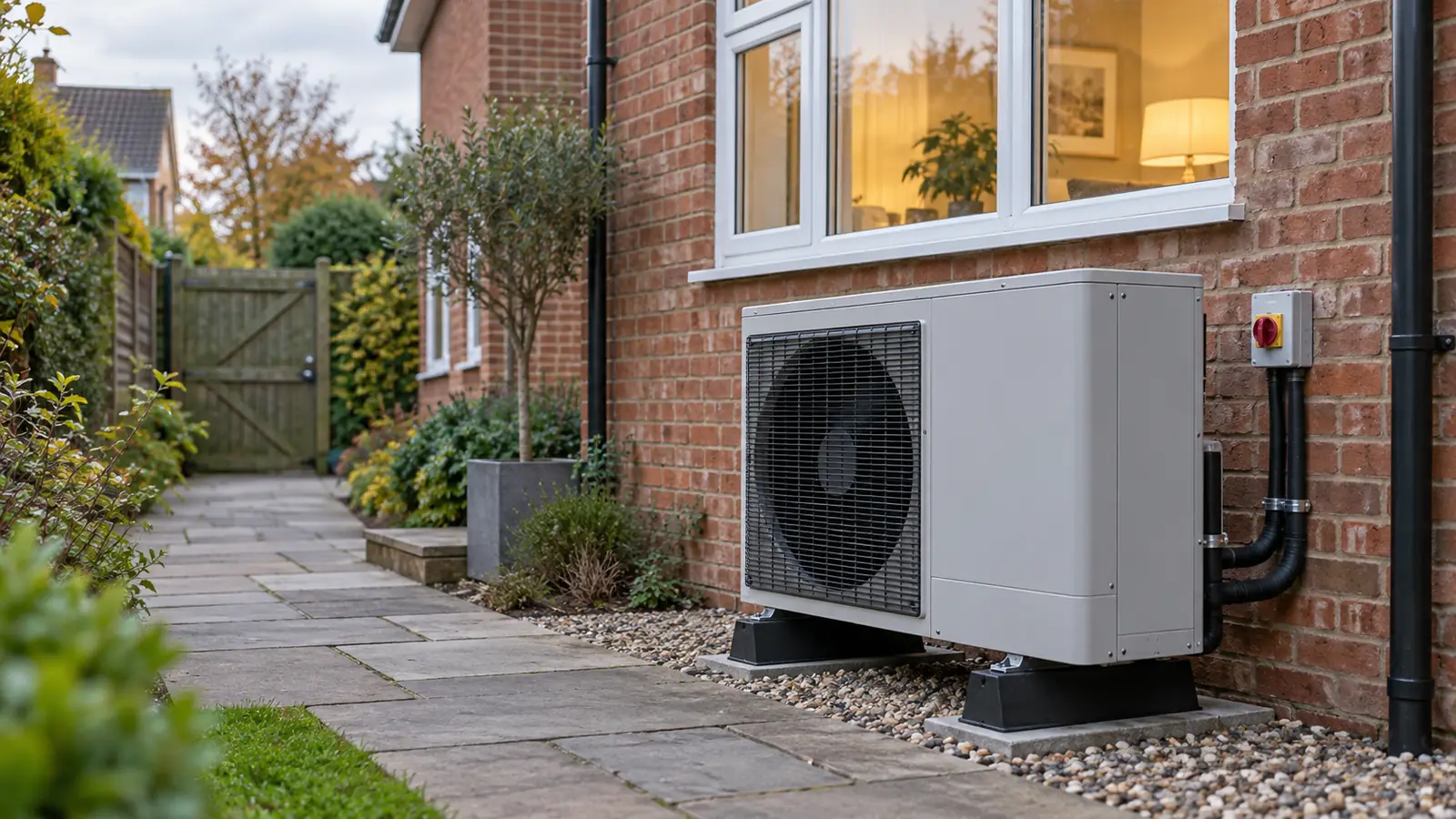
How much electricity does a heat pump use?
There is no single household average that will predict your bill reliably. Use depends on the property’s heat demand and the whole system’s efficiency, so a small, well-insulated home can consume much less than a large, draughty one.
Energy Saving Trust says a heat pump can provide three to four units of heat for each unit of electricity used. For annual estimates, use the seasonal performance factor, or SPF, because it averages performance across changing outdoor temperatures.
The government’s 2026 Energy Consumption in the UK statistics estimate that domestic heat pumps used 2,280 GWh of electricity in 2025, about 2.4% of total domestic electricity consumption. That national total shows growing use, but it is not a per-home benchmark and should not replace a property-specific calculation.
The formula for estimating annual heat pump electricity use
Use: annual heat-pump electricity (kWh) = annual heat demand (kWh of heat) ÷ seasonal performance factor. The installer’s design paperwork should give both figures and should be shared before work starts.
For example, suppose a home needs 10,000 kWh of useful heat a year and the designed SPF is 3.1. Estimated electricity use is 10,000 ÷ 3.1 = 3,225.81 kWh a year. At an illustrative 26.32p per kWh, the energy cost is 3,225.81 × £0.2632 = £849.03 a year, or about £70.75 a month when averaged across the year.
The 26.32p rate is Ofgem’s average Direct Debit electricity unit rate for a standard variable tariff in Great Britain from 1 October to 31 December 2026. It is only a comparison rate. Your price varies by tariff, region, payment method and time of day, while Northern Ireland has a separate electricity market. Use the exact rate on your bill or tariff app.
Do not add the electricity standing charge to the heat pump’s running cost if the home would keep its electricity connection anyway. The charge belongs in the whole-house bill and is paid once per day, not once per appliance.
- Find annual space-heating and hot-water demand in kWh from the system design.
- Use the designed SPF, not a laboratory Coefficient of Performance measured at one condition.
- Divide heat demand by SPF to estimate electricity consumption.
- Multiply electricity kWh by the applicable unit rate and divide pence by 100.
Why your actual electricity use can be different
SPF is a design estimate. Actual use changes with weather, thermostat settings, occupancy, hot-water demand and flow temperature. Colder air makes an air-source heat pump work harder, while higher flow temperatures generally reduce efficiency.
The condition of the building matters too. Insulation, draught control and appropriately sized radiators reduce the heat and flow temperature needed to keep rooms comfortable. A system that repeatedly uses a direct-electric boost heater will also consume more electricity because that element does not multiply heat in the way the heat pump does.
Unlike a boiler, a heat pump normally works best steadily for longer periods, with a small temperature set-back instead of repeated rapid reheating. Follow the manufacturer’s instructions and ask a competent installer before changing technical settings.
How to measure heat pump electricity use
A dedicated electricity meter or the heat pump’s monitoring system gives the clearest result, provided you understand whether it includes pumps, controls, immersion heating and backup elements. Check the manual or installer handover documents before comparing figures.
For a bill check, take dated readings from the same electricity register, subtract the earlier reading from the later one, and calculate the charge using the rate that applied. If you have a time-of-use tariff, split consumption by rate where the meter or supplier data allows. Our electricity bill calculator can check the whole-house charge from readings, while the appliance cost calculator can model a measured block of heat-pump kWh.
Does a heat pump cost less than a gas boiler?
Not automatically. Heat pumps use far less purchased energy for the same useful heat, but electricity usually costs more per kWh than gas. The result depends on system performance, tariffs, the old boiler and whether removing the last gas appliance ends the gas standing charge.
Compare space heating and hot water on realistic seasonal efficiency, with standing charges kept separate. Do not compare the heat pump’s whole electricity bill with only the gas-usage line from an old dual-fuel bill, because ordinary household electricity is mixed into the new total.
Energy Saving Trust says replacing direct electric heating should reduce electricity costs considerably, while replacing a modern gas or oil boiler may not. Ask to see the heat demand, SPF and tariff assumptions behind any installer estimate.
How to reduce heat pump electricity use safely
Check that the heating curve and flow temperature are no higher than needed for comfort, keep the outdoor unit clear, and deal with recurring faults. Make one small control change at a time and observe comfort and kWh.
Keep radiators unobstructed and ask whether they are large enough for the intended flow temperature. Improve insulation and draught proofing where practical. Do not disable hot-water hygiene cycles or safety functions.
Compare standard and time-of-use tariffs using your real consumption pattern. Cheap hours can help with hot water or some space heating, but expensive peak rates can outweigh the saving. Solar panels may supply part of daytime demand, yet winter and night-time heating still normally requires grid electricity.
Great Britain and Northern Ireland
The consumption formula works anywhere, but tariffs and support schemes differ. Ofgem’s price cap and published regional rates apply to England, Scotland and Wales, not Northern Ireland. Northern Ireland households should use their supplier’s current unit rates and local consumer guidance rather than a Great Britain average.
Wherever you live, use the installer’s design figures, your own tariff and measured readings where available. Those three inputs are more useful than a generic claim about what a heat pump “should” use.
Heat pump electricity use FAQs
How many kWh does a heat pump use per day?
Daily use varies sharply with the weather, hot-water demand and the home’s heat loss. Divide annual heat demand by the designed SPF for an annual estimate; use dedicated monitoring for daily figures rather than converting the unit’s maximum power rating into 24-hour use.
Does a heat pump use electricity when it is not heating?
Controls and circulation components can use a small amount, and the system may heat water, run frost protection or complete a cycle even when rooms do not feel actively heated. Check monitoring data and the manual for your system.
What is the difference between COP and SPF?
Coefficient of Performance describes efficiency at a particular set of conditions. Seasonal Performance Factor averages performance over a year and is normally the better figure for estimating annual electricity use and running cost.
Will a bigger heat pump always use more electricity?
No. Consumption mainly follows the heat the home needs and the system’s efficiency. Correct sizing matters for performance, but the maximum output printed on the unit is not a prediction of continuous electricity use.
Can a smart meter show only my heat pump use?
Usually not by itself: a smart meter records the whole property. A dedicated sub-meter or compatible heat-pump monitor is better for separating the system from other electricity use.
Estimate your electricity bill
Add measured or estimated heat-pump kWh to the rest of your household use when checking the whole bill. Use your actual unit rate and meter readings; the normal standing charge is not caused by the heat pump and should only be counted once.
Sources
Efficiency, consumption, tariff and operating guidance were checked against these sources on 13 October 2026: