

Electricity Shutoff Notice: What to Do Before the Date
Received an electricity shutoff notice? Check the deadline, ask about payment arrangements and local protections, and get confirmation of any disconnection hold.
By Electricity Bill Calculator · Updated
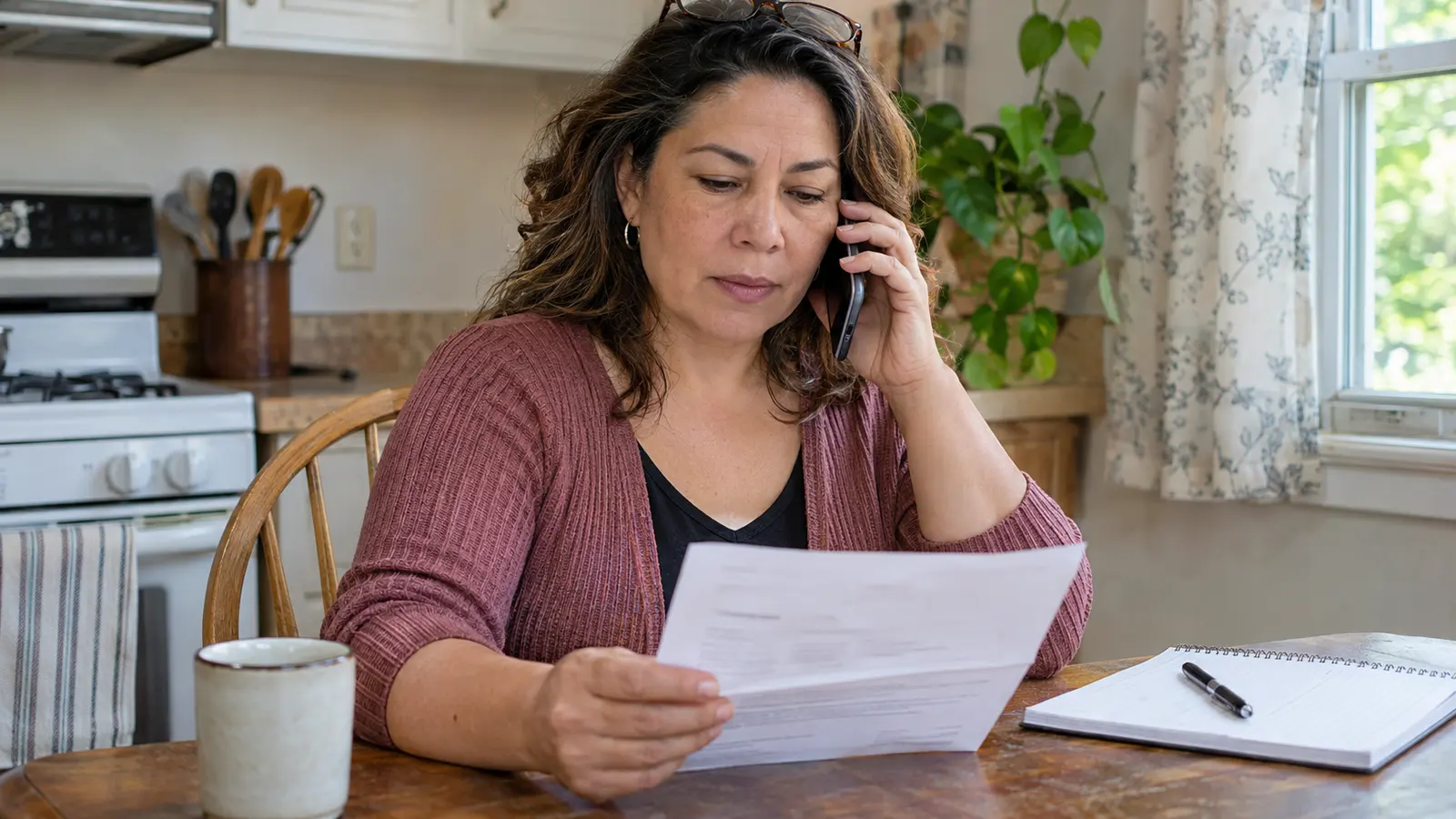
Call about the shutoff date, not just the balance
If you receive an electricity shutoff notice, contact your provider through the number on your bill or its official website. Ask what must happen to prevent disconnection, by what date, and how you will receive confirmation. A payment receipt, an assistance application and a confirmed disconnection hold are different records; find out which one your account needs.
There is no single national notice period or winter shutoff ban. USAGov says state disconnection policies differ and may depend on weather, age, disability and the provider. Use the notice to identify the deadline, then find the rule that covers your service. If the date is close or has passed, say that at the start of the call.
Put the notice beside the current account record
Save the entire notice, including the reverse side, and open your latest bill or online account. Write down the service address, notice date, earliest disconnection date, stated reason and amount requested. Check whether the notice concerns an unpaid bill, a missed arrangement installment or another account requirement. A later bill's ordinary due date should not be treated as an extension of a separate shutoff deadline.
Look for payments that have not appeared on the account. If you already paid, give the provider the payment date, amount, confirmation number and method. Ask it to trace the payment and confirm whether disconnection is still scheduled. Do not assume that showing money left your bank establishes when the utility credited it.
Verify an unexpected threat independently. The Federal Trade Commission warns about utility impersonators who demand immediate payment and insist on gift cards, cryptocurrency or other hard-to-recover methods. End that contact and use a number from your actual bill or the provider's website. A genuine overdue balance does not make an unsolicited caller's payment instructions trustworthy.
Ask for the amount and action that will stop disconnection
The question to ask is specific: what amount must be paid, or what agreement must be completed, to prevent this disconnection? Ask whether the amount includes current charges, old debt, an installment or a deposit. Request the payment posting cutoff and accepted payment channels. If you cannot meet the demand, ask for a payment arrangement based on what you can afford and the local rules that govern it.
Before accepting an arrangement, get its down payment, installment dates, treatment of new bills and consequences of a missed payment. Ask when the provider will remove or suspend the disconnection order. Keep the agreement and confirmation with the notice. A conversation about possible terms is not the same as an arrangement entered on the account.
Here is an invented example to test affordability, not a required offer: a household owes $720 in past-due charges. Suppose the provider agrees to $120 upfront and six monthly installments on the remaining $600. Each installment is $100. If the next current bill is $145 and must be paid separately, that month's total payment is $245. The original $120 down payment is additional, not part of those six installments.
If $245 is beyond your budget, say so before agreeing and ask what alternatives apply. For a separate check of new usage charges, the US calculator uses one rate, fixed charges and separately entered taxes or fees. It does not set repayment terms or reconstruct time-of-use rates, tiers, demand charges or solar credits.
Find the protections that apply to your household
Use the state-policy link on USAGov's energy-bill help page, then check the official state utility commission's consumer guidance and your provider's disconnection policy. Confirm that the guidance covers your provider and account type. If the commission does not handle your service, ask which office does; do not borrow a neighboring utility's rules.
Tell the provider promptly about a household medical condition that could be worsened by losing service. Ask which certification is required, who can submit it, where it must go and when it expires. Ask about relevant age, disability and weather provisions as well. Get the result of that review rather than assuming a health disclosure or a cold forecast automatically cancels the notice.
New York is one jurisdiction example. Its Department of Public Service says residential customers covered by HEFPA receive a Final Termination Notice with the reason and earliest possible shutoff date, followed by 15 days to resolve the problem. Its medical-emergency procedure provides a 30-day continuation when a doctor or local board of health supplies the required notification; telephone notification needs written certification within five business days. Renewal has further conditions. These are New York provisions, not nationwide deadlines.
New York's November 1–April 15 cold-weather provisions require additional health-and-safety checks for heat-related service. They are not an unconditional winter moratorium. Elsewhere, ask for the local weather rule and what the provider needs to establish that it applies to your account.
Use the urgent help route while the notice is active
If you need financial help, tell the local assistance office that you have a disconnection notice and give it the date. USAGov identifies LIHEAP as a possible route for heating, cooling and energy-crisis help, with local eligibility requirements. Ask whether a crisis application is available and what the utility needs from the agency. Separately ask the utility whether it has placed a hold and when that hold ends. Do not subtract an unapproved grant from the required payment.
If the utility cannot resolve a disputed notice, contact the official complaint office that covers it and explain the impending disconnection first. Have the notice, payment evidence and utility case number ready. Ask for the urgent procedure and what you must pay while the issue is reviewed. A routine online complaint may not be the right channel for a deadline hours away.
For example, New York DPS directs customers with final notices threatening shutoff within 48/72 hours to its emergency hotline instead of the online form. Its linked complaint page lists the current number and operating hours. Use your own jurisdiction's urgent instructions; filing a complaint does not create the same payment or disconnection protections everywhere.
If the electricity has already been disconnected
Ask for restoration requirements explicitly: the payment or agreement needed, any other conditions, how to report completion and the expected reconnection time. Tell the provider about any immediate health risk and ask which urgent restoration process applies. Keep payment and agreement references ready for that conversation.
Before ending the call, ask the representative to confirm the account status and next required action. Record the case number, any remaining deadline and the promised follow-up. If a hold or restoration is still unconfirmed, take that precise unresolved issue to the urgent complaint office rather than waiting for the next regular bill.
Sources
Utility examples describe that utility’s service; check your own provider’s guidance.