
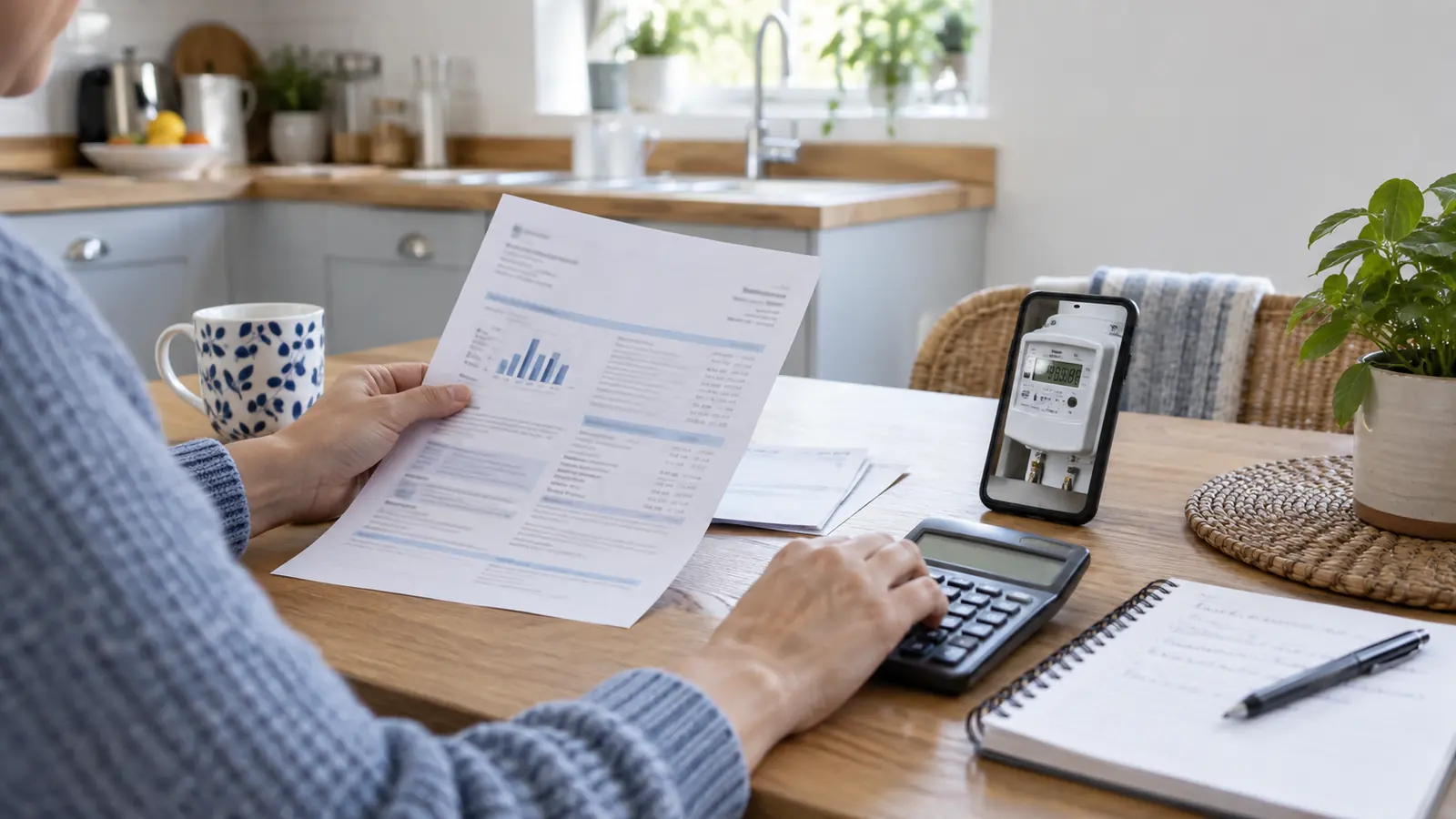
What is an electricity back bill?
A back bill, sometimes called a catch-up bill, is a request for payment for electricity used in an earlier period that was not charged correctly at the time. It can follow estimated readings, a meter or account setup problem, a failed smart-meter connection, incorrect direct debit calculations or a supplier billing-system error.
A large balance is not automatically invalid. The important questions are when the electricity was used, whether the supplier previously billed or clearly told you about the charges, which regional rules apply and whether your actions prevented accurate billing. Ask for a line-by-line calculation instead of relying only on the balance shown in an app or direct debit notice.
- Record the date you first received the catch-up charge.
- Check the start and end dates covered by every line of the bill.
- Separate newly calculated charges from older amounts that were already billed.
- Compare actual and estimated meter readings with your own photographs or records.
The 12-month back-billing rule in Great Britain
Ofgem says a domestic supplier cannot normally make you pay for electricity used more than 12 months before it first took action to recover the charge. Protection can apply where you had not previously received an accurate bill or statement for the energy, and where a supplier had set a direct debit too low to cover the amount due. The rule also covers standing charges and other supply charges from the protected period.
The limit is about previously unbilled consumption, not the age of every debt. If the supplier sent an accurate bill within the allowed period and you did not pay it, Citizens Advice explains that the supplier can still pursue that amount later. Charges for electricity used within the latest 12 months can also remain payable even when older unbilled charges must be removed.
When the protection may not apply
Ofgem can allow recovery beyond 12 months where a customer acted unreasonably and stopped the supplier billing accurately. Examples include blocking reasonable access to the meter, ignoring payment requests or stealing electricity. Meter tampering is dangerous and can also be a criminal matter.
A missed meter-reading request does not by itself prove that every old charge is valid. Ofgem’s decision introducing the rule says suppliers must assess behaviour case by case. Give the supplier evidence that you cooperated, such as submitted readings, dated meter photographs, access appointments, emails and screenshots from your online account. Ask it to identify the exact exception it relies on if it refuses to remove older charges.
Northern Ireland uses a separate 13-month limit
Northern Ireland is not covered by Ofgem’s Great Britain supply rules. The Utility Regulator introduced a 13-month limit from 1 September 2020 for domestic consumers and microbusinesses, covering electricity and gas across payment types. The supplier licence contains exceptions, including circumstances involving access to an actual meter reading, so ask for the relevant licence basis when a supplier says the limit does not apply.
Raise the issue with the supplier first. If its normal response period passes or the answer does not resolve the problem, the Consumer Council for Northern Ireland can help with electricity billing and meter complaints. Do not use the Great Britain Energy Ombudsman route for a Northern Ireland supply account.
How to check a catch-up bill step by step
Start with the meter serial number and present reading. Match the serial number to the bill, photograph the reading and mark each billed reading as actual or estimated. Then build a simple timeline showing every bill, statement, payment, tariff change and meter reading. This reveals whether the supplier is billing the same period twice or using a reading from the wrong meter.
Ask the supplier to divide the balance by billing period and show the opening and closing readings, kWh used, unit rate, number of standing-charge days and payments credited. Rates may have changed several times, so a calculation that applies today’s price to the whole period may be wrong. For a multi-rate meter, check each register separately and add the standing charge only once for each day.
- Current meter photograph, including the serial number.
- Earlier dated readings, move-in reading and tenancy or completion date.
- All bills, statements, direct debit notices and payment records.
- Messages showing that you reported billing or smart-meter problems.
- The supplier’s written calculation and explanation of the permitted period.
Worked example: checking the recoverable amount
Suppose a Great Britain household first receives a catch-up bill on 2 October 2026 covering two years of previously unbilled electricity. The customer supplied readings when asked and did not obstruct the supplier. The starting point is that electricity used before 2 October 2025 should normally be removed, while correctly calculated use from 2 October 2025 onward can remain payable.
A dated reading shows 2,700 kWh used in that later 365-day period. If the applicable VAT-inclusive unit rate was 26p per kWh and the standing charge was 55p per day throughout, the illustrative charge is £702.00 for usage plus £200.75 in standing charges, or £902.75 before subtracting payments already made. Real bills often cross tariff changes, so calculate each price period separately and do not use this example’s rates for your account.
How to challenge the bill and get payment help
Contact the supplier promptly and say that you are making a formal complaint about back billing. Identify the disputed dates, attach your evidence and ask it to pause recovery of the disputed portion while it investigates. Request a corrected bill and an explanation of how the back-billing rule was applied. Continue paying undisputed current usage if you can, because the complaint does not make new electricity free.
In Great Britain, the Energy Ombudsman currently accepts a dispute after the supplier has had eight weeks to resolve it, or sooner if it issues a deadlock letter. The service is free for consumers. In Northern Ireland, take an unresolved billing complaint to the Consumer Council after following the supplier’s complaint process.
If the valid part of the bill is unaffordable, tell the supplier immediately. Citizens Advice says you can ask for an instalment plan, and the supplier must consider what you can afford, your circumstances and likely future energy use. A back-billing protection may reduce an incorrect balance, while a payment plan deals with the amount that is genuinely due.
Reduce the risk of another back bill
Submit regular readings if the supplier is not receiving smart readings, check each statement for estimated figures and keep dated photographs. After moving home, record the opening reading and meter serial number, tell the supplier the occupancy date and keep the final bill from the previous property.
Review whether your payments broadly cover your measured use. A low direct debit is not proof that the account is up to date, but it is a warning to inspect the balance and readings. Use the electricity bill calculator with your actual tariff rates between readings, then compare its estimate with the supplier’s statement and query unexplained differences early.
Electricity back billing FAQs
Can my electricity supplier bill me for more than 12 months?
In Great Britain, a supplier normally cannot recover previously unbilled electricity used more than 12 months before it took recovery action when the customer was not at fault. It can still pursue an older amount that was billed correctly within the time limit, and exceptions apply where a customer acted unreasonably.
Does a low direct debit count as back billing?
It can. Ofgem says the protection can apply where a supplier previously set a direct debit too low to cover the amount due. Check whether the catch-up amount relates to energy more than 12 months old and whether it had already been accurately billed or shown on a statement.
Do the same back-billing rules apply in Northern Ireland?
No. Northern Ireland has a separate supplier-licence rule with a 13-month limit, introduced by the Utility Regulator. Its exceptions and complaint route are separate from the Great Britain system.
Should I cancel my direct debit while disputing a back bill?
Do not cancel automatically. Ask the supplier to pause recovery of the disputed amount and keep paying current, undisputed usage where possible. Cancelling without an agreement can create missed-payment problems and does not resolve whether the bill is correct.
What evidence should I send with a back-billing complaint?
Send dated meter photographs, reading submissions, bills and statements, payment records, move-in evidence where relevant, access appointments and messages about meter or billing faults. Ask the supplier for its own dated breakdown and the exception it relies on.
Estimate your electricity bill
Use dated meter readings and the unit rates and standing charges that applied during the recoverable period. Calculate each tariff period separately, then compare the total with the supplier’s revised breakdown rather than assuming current rates apply to older use.
Sources
Back-billing limits, exceptions, complaint routes and affordability steps were checked against these regulator and consumer-protection sources on 2 October 2026: